The Friday Fungo

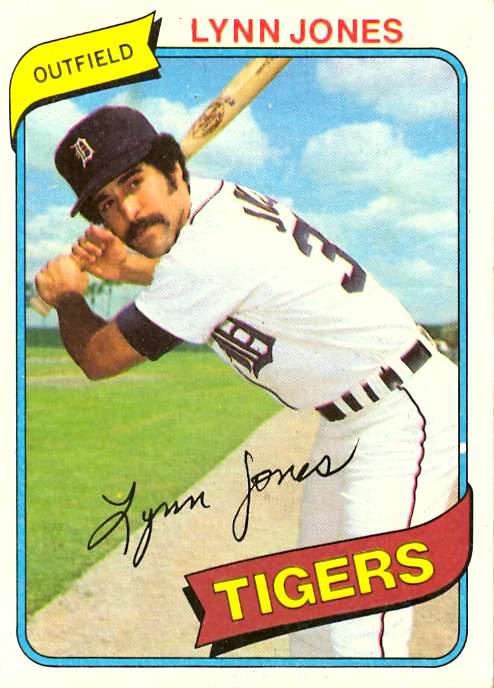
Lynn Jones – #35

The Tigers selected Lynn Jones from the Reds in the December 1978 Rule 5 Draft, and he made some noise in his major-league debut on April 13, 1979.

In the 5-4 Tigers loss to the Rangers, Jones started in centerfield, batting eighth, and went two for three with a walk, a run scored and a stolen base.

All told, he appeared in 95 games in his rookie year, batting .296 with four home runs.

Jones was a role player for Sparky’s earliest Detroit teams, seeing time mostly in the outfield and as a pinch-hitter, and posting a .347 on-base percentage in his first three seasons.

The 1982 and 1983 seasons, though, saw his production slip and his playing time was limited to 64 at bats in ’83. That offseason the Tigers made him a free agent and he promptly signed with the Royals.

In 1984, Jones hit a career-high .301 in a similar role to what he played in Detroit. He faced his former team in the American League Championship Series, going just 1 for 5.

The next season Jones appeared in 110 games for Dick Howser’s Royals — a career high — but saw his average plummet 90 points. It wasn’t a total downer though, he won a World Series ring that year and had two extra-base hits in the Series against the Cardinals.

1986 was the final big-league season of his eight-year career. He made his final appearance on the last game of the season: Oct. 4 against the A’s. Jones replaced Rudy Law in left field in the bottom of the ninth and the first batter, Terry Steinbach, hit the ball to him for an out.

Jones hit .128 in 67 games with a single RBI and after that season he became a free agent but didn’t sign with another team.

His final numbers: .252 average, seven HR, 91 RBI and 13 stolen bases.

In 1991 and 1992, Jones was the Royals’ first base coach before managing in the Marlins system. In 2001, he was the Marlins’ first-base coach. He earned his second World Series ring in 2004 as a member of Terry Francona’s coaching staff in Boston.

Birthdays

Denny McLain, Billy Beane, the late Ferris Fain, Johnny Gorsica, George Wilson, Al Klawitter, Lou Schiappacasse, Harry Lochhead, Duff Cooley

Today’s Grid

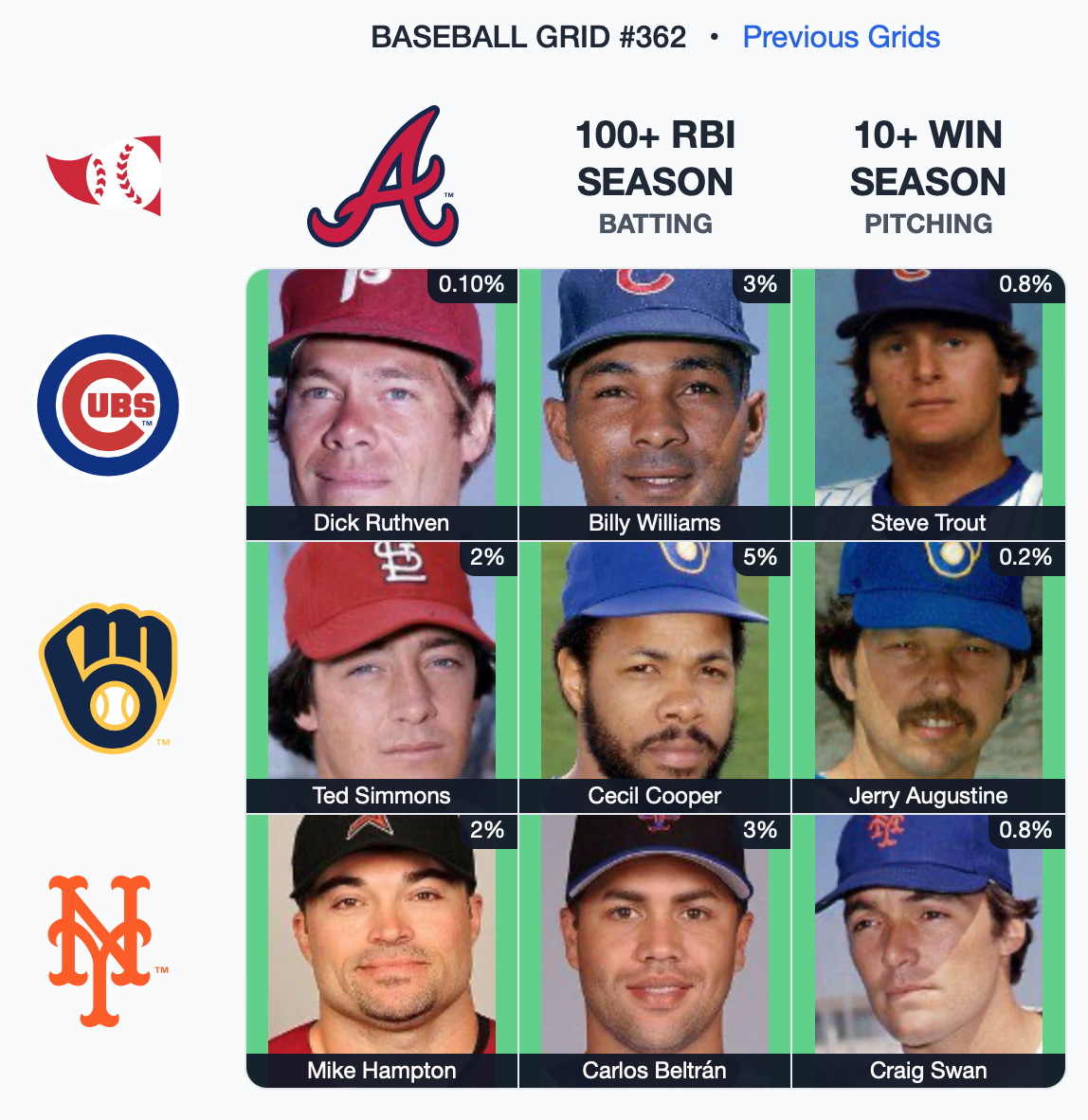
⚾️ Immaculate Grid 362 9/9 – Rarity: 18

See you tomorrow.

The Thursday Fungo

Tigers’ Opening Day Record, 1977-1994

The wheelhouse of The Daily Fungo is the Ralph Houk, Les Moss and Sparky Anderson years. So, through that narrow lens in the Tigers’ much broader history, let’s look at how the teams from 1977 through 1994 opened their respective seasons.

* Indicates I was at the game.

YearOpening DayScorePitchers
1977April 7
Home
Boxscore
Royals 7
Tigers 4
W: Paul Splittorff
L: Dave Roberts
Save: Mark Littell
1978April 7
Home
Boxscore
Tigers 6
Blue Jays 2
W: Mark Fidrych
L: Dave Lemanczyk
1979April 7*
Home
Boxscore
Rangers 8
Tigers 2
W: Ferguson Jenkins
L: Dave Rozema
1980April 10
Away
Boxscore
Tigers 5
Royals 1
W: Jack Morris
L: Dennis Leonard
1981April 9*
Home
Boxscore
Tigers 6
Blue Jays 2
W: Jack Morris
L: Joey McLaughlin
1982April 9*
Away
Boxscore
Royals 4
Tigers 2
W: Larry Gura
L: Jack Morris
1983April 5
Away
Boxscore
Tigers 11
Twins 3
W: Jack Morris
L: Brad Havens
1984April 3
Away
Boxscore
Tigers 8
Twins 1
W: Jack Morris
L: Albert Williams
1985April 8
Home
Boxscore
Tigers 5
Indians 4
W: Jack Morris
L: Ernie Camacho
Save: Willie Hernandez
1986April 7*
Home
Boxscore
Tigers 6
Red Sox 5
W: Jack Morris
L: Sammy Stewart
Save: Willie Hernandez
1987April 6*
Home
Boxscore
Yankees 2
Tigers 1
10 innings
W: Dave Righetti
L: Jack Morris
1988April 4
Away
Boxscore
Tigers 5
Red Sox 3
10 innings
W: Jack Morris
L: Lee Smith
Save: Mike Henneman
1989April 4
Away
Rangers 4
Tigers 0
W: Charlie Hough
L: Jack Morris
1990April 9
Away
Boxscore
Red Sox 5
Tigers 2
W: Roger Clemens
L: Jack Morris
Save: Lee Smith
1991April 8
Home
Boxscore
Tigers 6
Yankees 4
W: Paul Gibson
L: Greg Cadaret
Save: Mike Henneman
1992April 6
Home
Boxscore
Blue Jays 4
Tigers 2
W: Jack Morris
L: Bill Gullickson
1993April 5
Away
Boxscore
A’s 9
Tigers 4
W: Bob Welch
L: Mike Moore
Save: Dennis Eckersley
1994April 4
Away
Boxscore
Red Sox 9
Tigers 8
W: Scott Bankhead
L: Storm Davis
Save: Jeff Russell

The result? An even 9 and 9, with Jack Morris notching a 6-4 record — not counting his win against the Tigers on Opening Day 1992 as a member of the Blue Jays.

Birthdays

Craig Paquette and the late Jimmy Barrett

Today’s Grid

⚾️ Immaculate Grid 361 9/9 – Rarity: 69

See you tomorrow.

The Wednesday Fungo

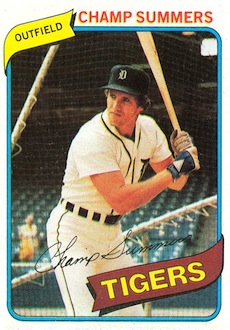
Champ Summers

Champ Summers was a fan favorite in Detroit and for good reason. He came to the Tigers as a career underachiever — at least at the major-league level — in an under-the-radar trade roughly a week before they hired Sparky Anderson in 1979.Summers_Champ

The Reds traded the 30-year-old Summers to the Tigers for a player to be named later on May 25, 1979. On Oct. 25, the Tigers sent Sheldon Burnside to the Reds to complete the trade.

The year before, John Junior Summers was the Minor League Player of the Year for the Reds’ top farm club, Indianapolis of the American Association. He led the AA with a .368 average, 34 homers and 124 RBI.

In 1979, Summers was hitting .200 with a single home run after 27 early-season games with the Reds, but after coming to Detroit, he had the best three seasons of his career.

That season he batted .313 with 20 home runs (14 solo) in 90 games and posted a .614 slugging percentage along with a 1.028 OPS. Anderson played Summers primarily in right field with a few DH assignments sprinkled in.

The Tigers rewarded him with a three-year contract near the end of the ’79 season.

Tigers fans loved Summers and he continued to provide punch to a young lineup. In 1980, his numbers slipped ever-so slightly but they were solid: .297/17/60 with an OPS of .897.

His production dropped further in the strike-shortened season of 1981 when, at age 35, his average fell to .255 and his power numbers plummeted, too. Summers hit only three home runs and eight doubles in 64 games in what would be his final season in Detroit.

In March 1982 the Tigers dealt him to the Giants for first baseman Enos Cabell. Summers would struggle in his two seasons in San Francisco, posting a .231 average and four home runs.

You can read the full post in the Archives.

Random Game: Aug. 7, 1987

Tigers 8 – Yankees 0

W: Jeff Robinson (8-5) – L: Rick Rhoden (14-7) | Boxscore

A classic midsummer showdown between A.L. East rivals, who were gridlocked atop the division heading into this game:

AL East Division July 17,1987
Tm W L W-L% GB
TOR 65 44 .596
NYY 65 45 .591 0.5
DET 62 44 .585 1.5
MIL 56 51 .523 8.0
BOS 51 57 .472 13.5
BAL 49 60 .450 16.0
CLE 40 69 .367 25.0
Provided by Baseball-Reference.com: View Original Table Generated 3/13/2024.
 
I was there for this one with a big group of friends in our usual bleacher seats, upper deck, dead center.

Miscellany

  • Umpires: HP – Mike Reilly, 1B – Tim Welke, 2B – Terry Cooney, 3B – Joe Brinkman
  • Time of Game: 2:31
  • Attendance: 48,262

Birthdays

Mike Aviles, the late Cliff Mapes, Eric Erickson and Mal Eason.

Today’s Grid

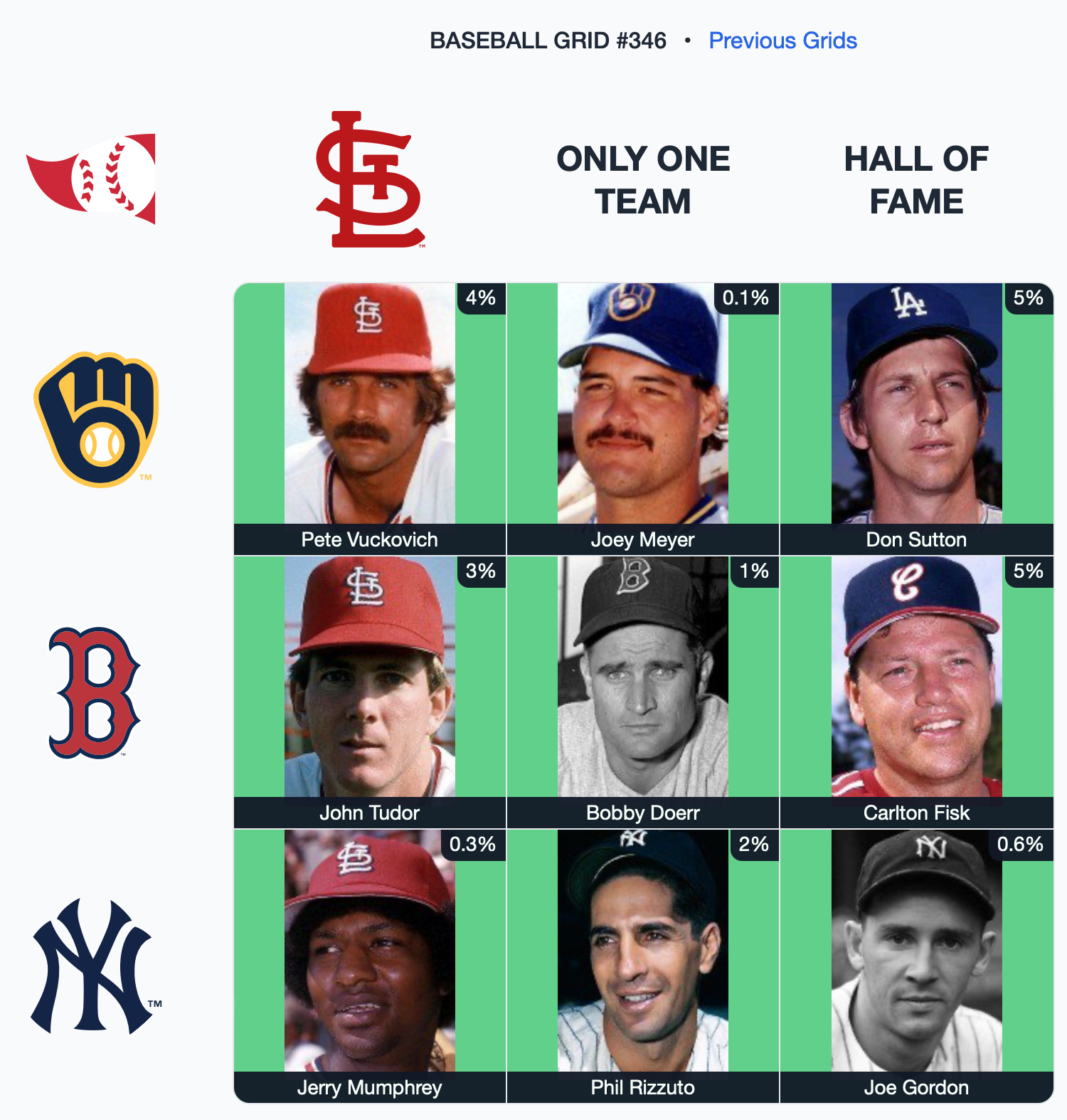
⚾️ Immaculate Grid 346 9/9 — Rarity: 22


Screenshot 2024-03-13 at 8.06.16 AM

See you tomorrow.

The Wednesday Fungo

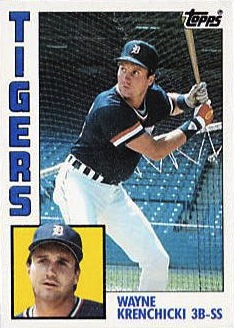
Wayne Krenchicki – #15

The summer of 1983 gave Tigers fans a glimpse of what was to come a year later: a young core of star players ready to move to the next level in the American League East. Detroit was in the race until September when the eventual World Series champion Orioles pulled away for good.

That season also introduced fans — ever-so briefly — to a role player with one of the best names in baseball history: Wayne Krenchicki.

He came to the Tigers in a late-June trade with the Reds for once-promising-lefty Pat Underwood. With Alan Trammell nursing injuries, the club needed some infield help.

As he always did with newly acquired players, manager Sparky put Krenchicki right to work, inserting him in the starting lineup against the Orioles and rookie Storm Davis.

On July 1, batting eighth in the lineup, Krenchicki went hitless in three at bats against Davis and the Tigers lost 9-5. He got his first Tigers hit two days later, a third-inning double off Tim Stoddard, in a 10-1 Tigers win.

In all, Krenchicki appeared in 59 games for the Tigers in 1983, seeing time at every infield position but played primarily at third. His time in Detroit was brief; in November that year, the Reds purchased his contract from the Tigers.

He finished his eight-year big-league career with the Reds and Expos, and retired after the 1986 season.

Birthdays

Leonys Martin, Marcus Thames, Gabe Alvarez, Roberto Duran, Joe Hall, Karl Best*, Ed Mierkowicz and the late Joe Orrell and Bob Swift.

*Best was traded by the Mariners to the Tigers for Bryan Kelly on June 22, 1987, but never appeared in a game. On March 28, 1988, the Tigers dealt him to the Twins for Don Schulze … who also never appeared in a game for the Tigers.

Today’s Grid

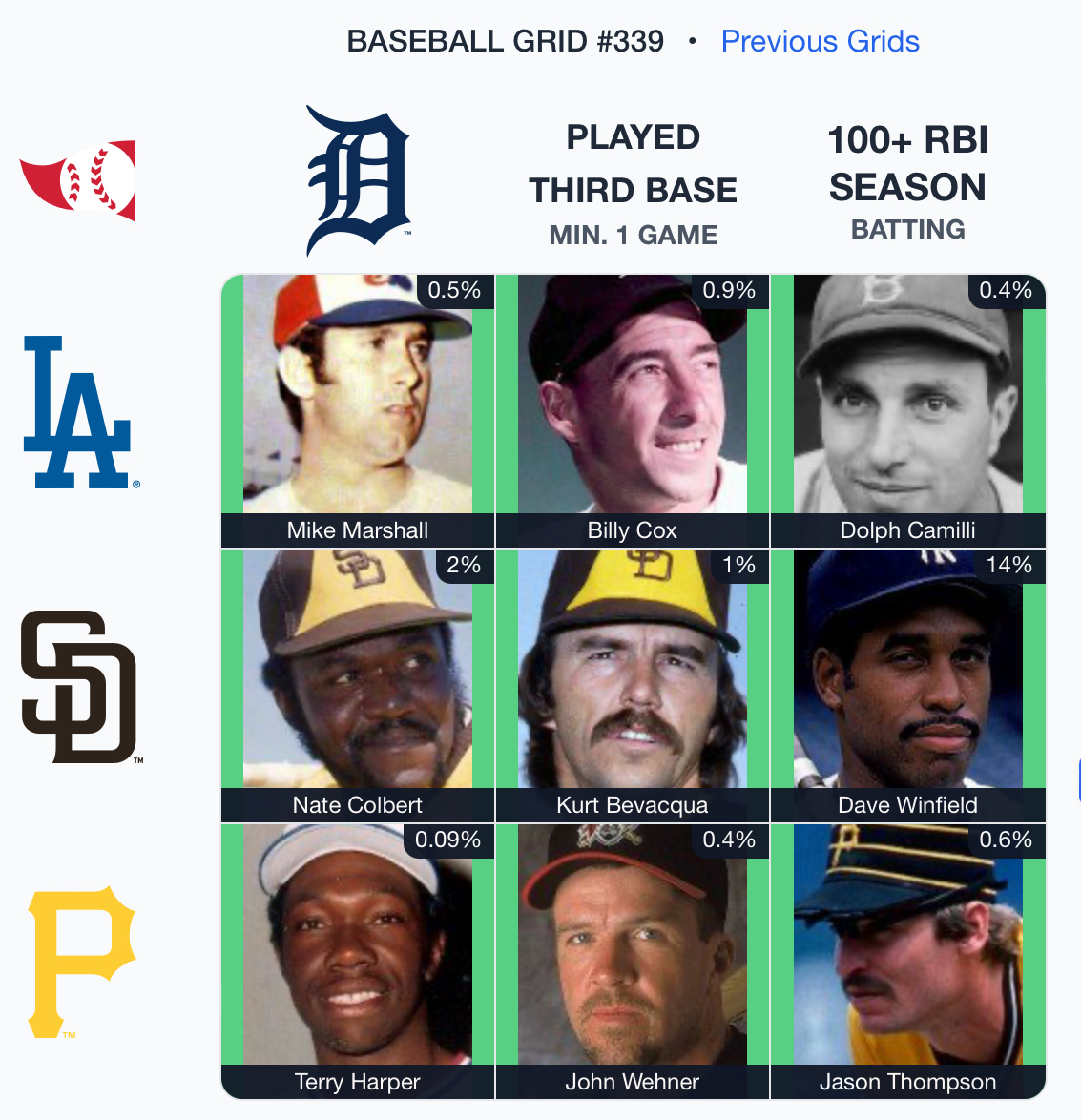
⚾️ Immaculate Grid 339 9/9 — Rarity: 21

Four former Tigers and one Tigers nemesis.

See you tomorrow.

The Thursday Fungo

On this Date in 2000

Sparky Anderson and Detroit Stars slugger Norman (Turkey) Stearnes were elected to the Hall of Fame by the Veterans Committee.

Random Game: April 6, 1992

Blue Jays 4 – Tigers 2

Jack Morris starting an Opening Day at Tiger Stadium for the visiting team was certainly different.  As usual, he went the distance, giving up ninth-inning homers to Cecil Fielder and Rob Deer.

W: Jack MorrisL: Bill Gullickson | Boxscore

  • Monday, April 6, 1992
  • Attendance: 51,068
  • Venue: Tiger Stadium
  • Game Duration: 2:46
  • Recap

    • Dave Winfield had three hits for the Jays.
    • Travis Fryman had a pair of hits.
    • Speaking of Rob Deer, this was the quintessential Deer performance: 1 for 4, three strikeouts to go with the homer.
    • Recently acquired Les Lancaster made his Tigers debut with a scoreless ninth.

    Birthdays

    He hasn’t made the Tigers yet, but Bligh Madris has a Leap Day® birthday.

    Today’s Grid

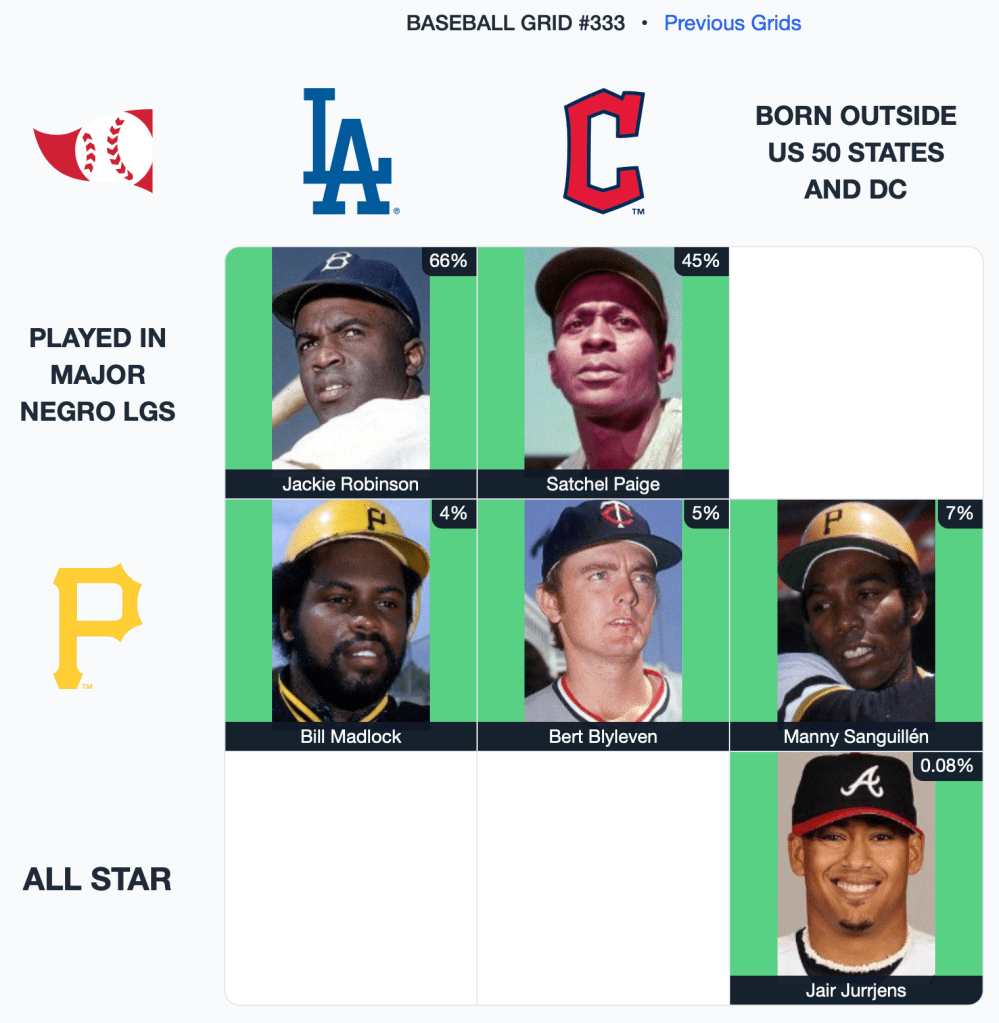
    ⚾️ Immaculate Grid 333 6/9 — Rarity: 427

    Abysmal. But! A nice Hail Mary in the bottom right corner.

    See you tomorrow.

The Tuesday Fungo

Ray Knight?

On this date in 1988, the Orioles traded third baseman Ray Knight to the Tigers for lefty Mark Thurmond.

I remember hearing about this move and thinking it was a brilliant way to further the ’84 team’s last-gasp effort to be a force in the American League East. 😐 

  • Knight appeared in 105 games in his ‘88, and hit .217 with 3 home runs and 33 RBI.
  • According to Baseball-Reference, he wore numbers 9 and 22 in Detroit.
  • He one-third of his season HR total on Oct. 2, the final game of the season and of his career: a two-run shot off Yankees starter Pat Clement, scoring Chet Lemon.
  • Knight also made two errors in the game.
  • His final career at bat was a ground out to third baseman Luis Aguayo.

Remembering Johnny B.

Today would have been John Wockenfuss’s 75th birthday.

Never a superstar, he was a Super Sub before the phrase existed. He played key roles for the Tigers and helped the club bridge the gap between emerging contender and World Series Champion.

‘Fuss was drafted by the Washington Senators in the 42nd round of the 1967 amateur draft. His road to Detroit wound through Arlington, Texas, after the Senators relocated following the 1971 season.

On June 6, 1973 he was traded by the Rangers with Mike Nagy to the Cardinals for Jim Bibby. Less than six months later – on Dec. 3 – St. Louis sent him to the Tigers for minor-leaguer Larry Elliott.

During the lean years of the mid-1970s, Johnny B. – wearing first #45 and then, from 1976 on, #14 – steadily gained playing time, primarily behind the plate for manager Ralph Houk. When Sparky Anderson was hired in 1979, ‘Fuss became more of a first baseman/outfielder/DH hybrid.

For the next four seasons, Wockenfuss had a .265 average. His best year at the plate for Detroit was in 1982 when hit batted .301 in 79 games.

Read the full appreciation in the Archives.

Birthdays

Anibal Sanchez, Craig Monroe, Matt Stairs, Greg Cadaret, and the late Johnny Pesky and Cy Perkins.

Today’s Grid

⚾️ Immaculate Grid 331 9/9 — Rarity: 38

See you tomorrow.

The Thursday Fungo

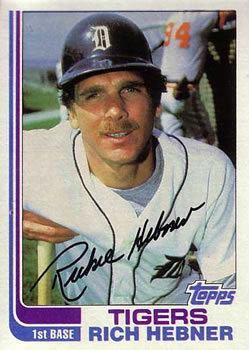
Richie Hebner, One of My Favorites

Richie Hebner didn’t swing at the baseball as much as he chopped at it. That hacker’s cut was, the Tigers thought, an ideal fit for Tiger Stadium’s right field porch. It also served him well in the offseason when he dug graves in the Boston area.

According to the Associated Press story on the trade that brought Hebner to Detroit in October 1979, the Detroit acquired him for his punch:

“We’re really pleased to get somebody like Richie,” a Tigers spokesman said. “He’ll give us some power hitting we need.”

Power? Richie Hebner?

He came from the Mets where in 1979, his only season in New York, he hit just 10 homers.

Check out this Fungo profile of one of my favorite Tigers from the Archives.

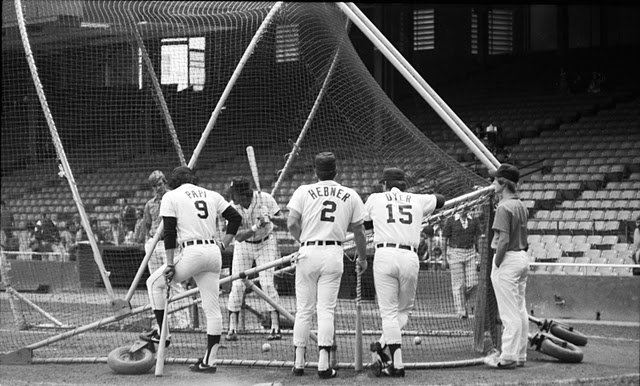
A quintessential 1980 Tigers photo: Champ Summers in the box, Stan Papi, Richie Hebner and Duffy Dyer looking on.

Birthdays

Dixon Machado, Steve Colyer and the late George Lee “Sparky” Anderson, Jackie Sullivan, Tony DeFate and Clarence Mitchell

Today’s Grid

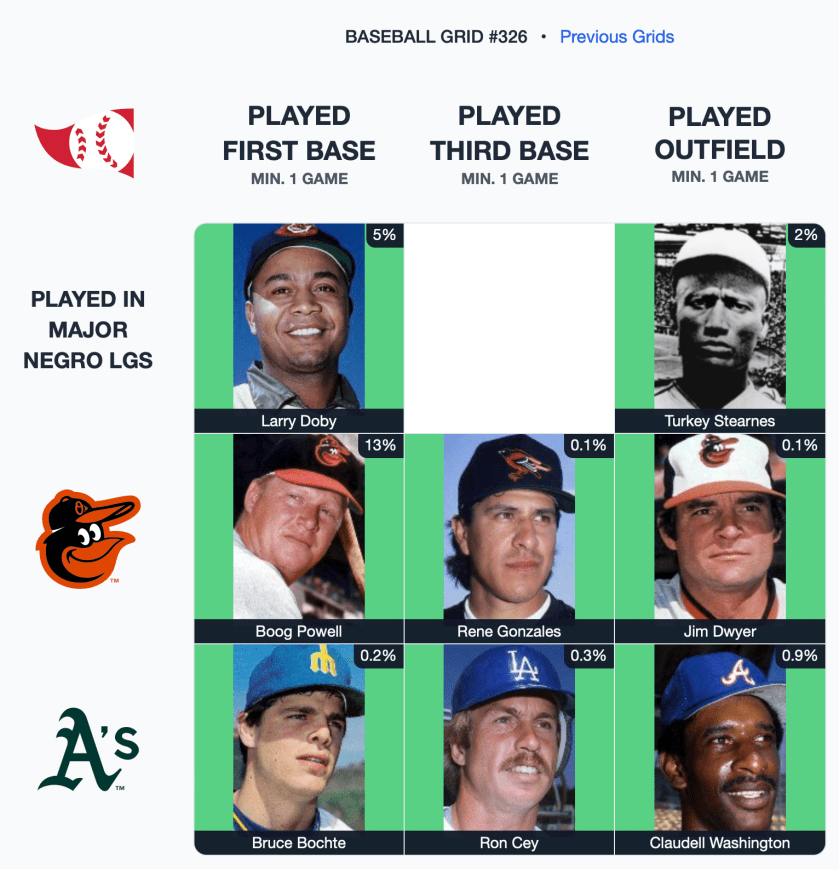
⚾️ Immaculate Grid 326 8/9 — Rarity: 121

See you tomorrow.

The Saturday Fungo: Feb. 3

Happy Birthday, Trixie

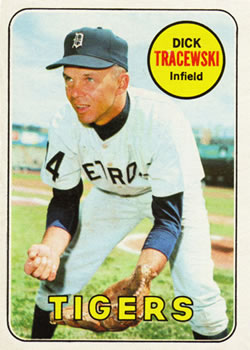
Happy 89th Birthday to former Tigers infielder and long-time first base coach Dick Tracewski.

He was a player on the 1968 World Series champs, a coach on the ‘84 team and, officially, once an interim Tigers manager: filling in between the fired Les Moss and the hired Sparky Anderson in 1979.

Ten years later Sparky took a short leave of absence due to the abysmal ‘89 team’s losing and Tracewski took over for a few games, but Baseball-Reference only lists the ‘79 games in his official managerial record.

He was also a World Series winner with the 1963 and ’65 Dodgers.

Other birthdays: Fred Lynn, Joe Coleman and the late Wayne Comer.

Today’s Grid

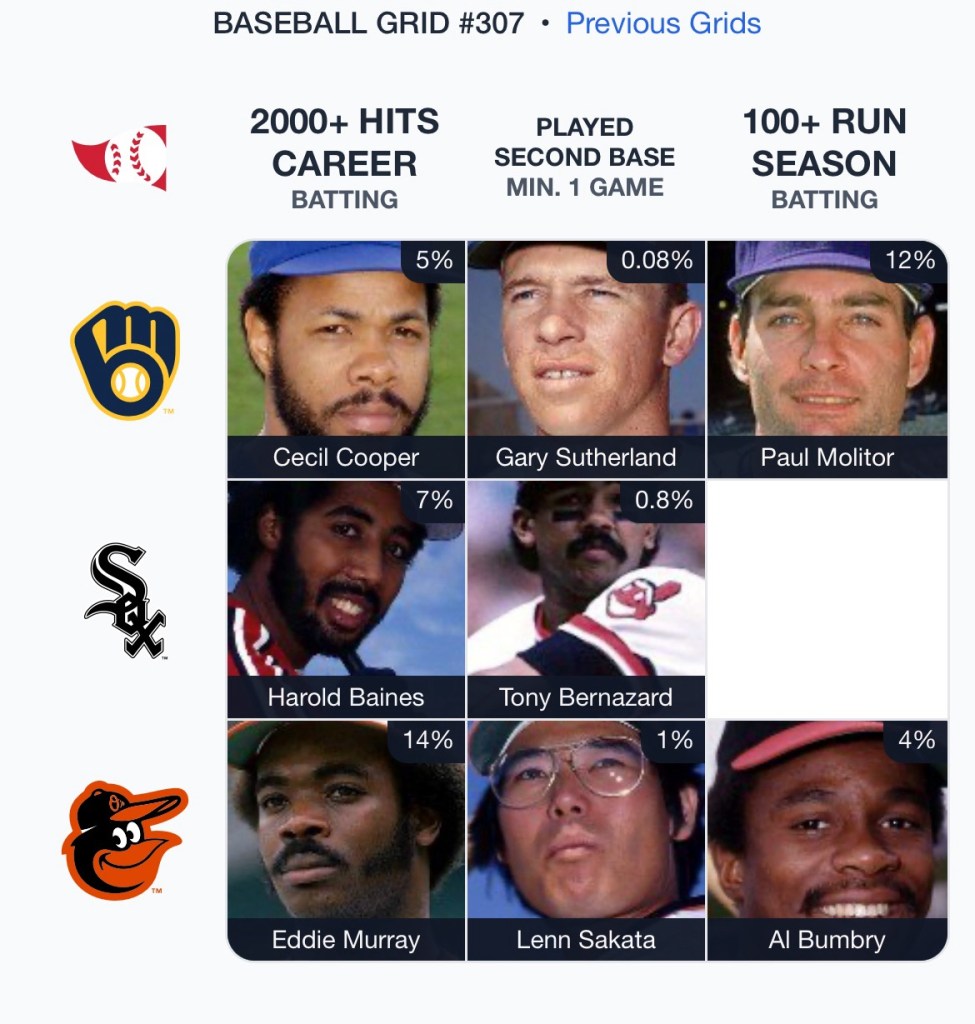
⚾️ Immaculate Grid 307 8/9 — Rarity: 145

Two former Tigers in today’s grid.

I hope you’re having a great weekend.

See you tomorrow.

Ralph Houk: Bridge between Martin and Anderson (and technically Les Moss)

Ralph Houk was the first Tigers manager I ever knew. I paid more attention to the players then – Jason Thompson, Steve Kemp and Aurelio Rodriguez – but I now wish I would have had the attention span to listen to his post-game interviews on Channel 4 or on WJR. I was only nine when baseball appeared on my radar so I’ll have to remember Houk, who died on July 22, 2010, at the age of 90, through the pages of my Tigers Yearbooks and media guides.

Or so I thought.

Thanks to the magic of the Internet, we can piece together Ralph Houk’s arrival in Detroit, where he presided over one of the bleakest periods of baseball in the city’s history, and displayed the least managerial charisma this side of Luis Pujols.

October 1973: Replacing Billy Martin

How bad were the New York Yankees in the early 1970s? Bad enough that their manager left the Bronx for the same job with the Tigers. That might be a stretch, but not by much. The 1973 Tigers finished 85-77, third in the six-team American League East, five games ahead of the 80-82 Yankees. So one could guess that Detroit was actually a step up. It was at least in the view of Ralph Houk, who won 970 games in New York over 10 seasons and was the successor to the legendary Casey Stengel. He would have nowhere near that success with the Tigers.

So, why would he leave New York? According to his obituary in The New York Times, not surprisingly, the reason was The Boss:

In January 1973, a syndicate headed by [George] Steinbrenner bought the team. Under CBS, Houk had a free hand on the field while Lee MacPhail handled the front-office duties. But Steinbrenner let Houk know how he felt things should be done and was overheard making derogatory comments about some of the players.

Houk resigned on the final day of the 1973 season, despite having two years remaining on a contract that paid him in the neighborhood of $75,000 per year. It would be roughly the same amount Tigers GM Jim Campbell would pay him each of the three years on his contract – which at the time made Houk the highest-paid manager in Tigers history.

So what was Houk’s vision when he came to Detroit? To erase “the thin line between losing and winning”, and to rebuild “but not make change for the sake of change.” That’s what he told the AP during his introductory press conference at his Oct. 11, 1973 introductory press conference – at which he was two hours late due to a series of flight delays. (Couldn’t get a direct flight from New York?) “I like the batting power. That’s what always worried me when we played Detroit,” Houk told the UPI.

And he knew of what he spoke: the Tigers trailed only the Indians in 1973 in home runs (157); in 72 they finished third behind Boston and Oakland with 122. Detroit led the league with 179 in 1971.

During his first press conference, Houk also told reporters that he wanted Al Kaline to be his designated hitter in 1974. And Kaline was the Tigers primary DH that season, hitting .262 with 28 doubles, 13 HR, 64 RBI and a .726 OPS in his final season. The mid-1970s didn’t provide Tigers fans much in the way of relevance in the American League East standings. But they weren’t expected to contend. Houk’s job was to develop the Tigers young players and clear the runway for a contender in the 1980s – if not sooner.

Though he was at the helm for one of the most dreadful seasons – 1975, when the club finished 57-102, the fifth-worst season in team history – and one of the most captivating stories of the decade, if not franchise history: Ron LeFlore’s journey from Jackson State Prison to Tiger Stadium.

Houk’s Tigers had nowhere to go but up in 1976 – and they did, winning 17 more games and improving to 74-86. The story in 1976, of course, was Mark Fidrych, who emerged from fringe prospect to national sensation and became the star-attraction on a team filled with journeymen. Fidrych, of course, went 19-9, started the All-Star Game and won the American League Rookie of the Year Award.

Turning the Corner Slowly

It was in 1977 that Houk and the Tigers began introducing fans to the young players that would become the core of the 1984 World Series champions. That season, Alan Trammell, Lou Whitaker, Lance Parrish, Jack Morris and Dan Petry arrived in Detroit to join Kemp and Thompson. The club finished 74-88 in fourth place an improvement over the fifth-place finish in 76 but not really. The expansion Blue Jays joined the American League East that season serving as the rising tide to lift every team in the standings.The Tigers seemed to turn the corner in 1978, finishing with their best record under Houk, 86-76, but dropped to fifth place.

“It’s time for me to go fishing.”

On Sept. 21, 1978, Houk surprised the Tigers when he announced his retirement at the end of the season. The 59-year-old Kansas native wanted to spend his summers at the fishing hole, but on the way out he wanted to stick it to the media, whom he saw as never giving him a fair shake in Detroit.

“The pressure of you people, the press that’s been the toughest thing,” he told the AP when he announced his retirement. Then with a laugh he added, “You can’t slap writers any more. You can’t punch them. You can’t do anything. A lot has changed.”

“I’ve been treated so great here,” Houk was quoted by the UPI. “It’s been an interesting job but the only way I could have stayed here five years was my associations with Mr. Campbell and Mr. Fetzer.” “Truthfully, I did not intend to stay here this long,” Houk said. “It’s been gratifying to me to see some of the young players we have stuck with develop.” Check this out from the same UPI story:

Houk, 59, originally signed a three-year contract to manage the Tigers but it was replaced after 1976 with a unique self-renewing agreement that raised his pay above the average of his contemporaries and provided for additional attendance and club performance bonuses.

It also had a built-in year of severance pay should the contract be terminated by either side. Campbell had said repeatedly Houk could manage the Tigers for as long as he wanted.

Performance bonuses? Attendance clauses? And for all these years we thought the Tigers brass was living in the 1920s. Knowing Campbell’s cheapskate reputation, I’d guess those attendance bonuses were unattainable given the quality of the ball club.

All told, Houk’s Tigers teams won 363 games and lost 443 from 1974-78. Hardly outstanding but probably right in line with what Campbell expected when he hired him.

The Tigers named Les Moss, then the manager of their Triple-A Evansville club, to replace Houk for the 1979 season. As we know, that experiment lasted all of 53 games before the Tigers cut him loose in favor of Sparky Anderson.

Houk returned to the dugout in 1981 as manager of the Red Sox, a job he held until 1984. I remember thinking at the time that it had to be strange for Houk to be back at Tiger Stadium in ’84 watching many of his former players steamroll their way to the World Series. Or gratifying … or both.

By most accounts, Ralph Houk wasn’t a warm human being, particularly with the press, but he was probably the ideal man for the job. And that job was to bridge the gap between the 1968 champions and the next generation of Tigers, the guys who won the World Series in 1984. He’ll never have the legacy of his successor, Sparky Anderson, but Ralph Houk’s place in Tigers history is an important one – if often forgotten.

Gibby an All-Star at Last

Nice feature on Kirk Gibson in today’s Arizona Republic. He’ll be on Bruce Bochy‘s staff for the All-Star Game in Phoenix next Tuesday and it will be the first time Gibby appears at an All-Start Game in uniform.

Back in 1985 and ’88, Gibson had better things to do. He politely turned down offers from managers Sparky Anderson and Whitey Herzog to rest, go hunting and spend time with family.

Gibson also wasn’t afraid to fire off a salvo or two, like when he said, “There are players in this game that want to be stars – let them go play.”

Today, he probably wouldn’t say such a thing, although he still refuses to publicly endorse any of his own players as reserves for next week’s game.