November 20, 2024

Number 20

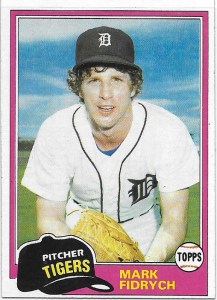
Fifty-two Detroit Tigers have worn number 20, and it’s currently worn by Spencer Torkelson. But the first player I remember wearing number 20 was Mark Fidrych from 1976 to 1980.

After that, it belonged to:

*Rich Hebner, in 1982, was the final player to wear number 2 before it was retired.

Birthdays

Tarik Skubal, Jacob Robson, Lino Urdaneta and the late Ron Cash, Lou Berberet, Augie Prudhomme and Ray Powell

See you tomorrow-ish.

Aug. 14, 1984: A Doubleheader Letdown

Game 1: Angels 6 – Tigers 4

W: Don Aase (2-1) – L: Willie Hernández (6-2) – S: Luis Sánchez (11) | Boxscore

Record: 77-42

Highlights

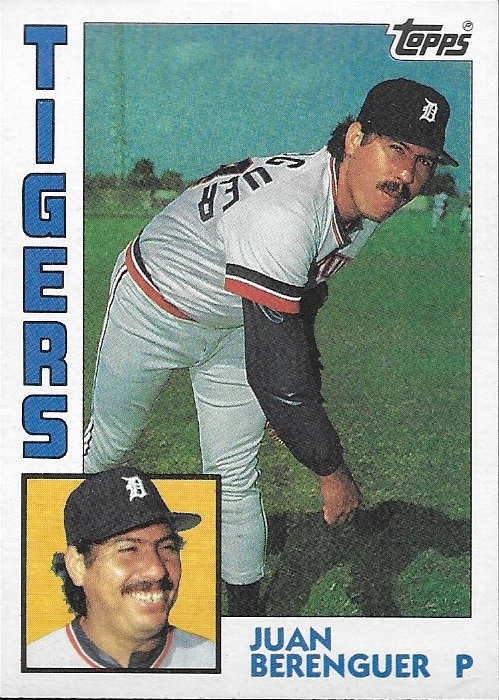
  • A decent start from Juan Berenguer, six innings, five hits, six strikeouts, is wasted by the bullpen. The Tigers were up 4-3 in the seventh until Bob Boone homered off Aurelio López to tie it. Then Willie surrendered two runs on three hits and a walk.
  • Both teams had 10 hits; Juan Beníquez had four of them for California.

Miscellany

  • Venue: Tiger Stadium
  • Umpires: HP – Rich Garcia, 1B – Tim McClelland, 2B – Don Denkinger, 3B – Mike Reilly
  • Time of Game: 2:53

Game 2: Angels 12 – Tigers 1

W: Bruce Kison (3-1) – L: Dave Rozema (7-4) | Boxscore

Record: 77-43 — 7.5 games up on Toronto

Highlights

  • Rozema started and last two innings, giving up five runs on seven hits. Doug Bair wasn’t good either: 31/3 innings, five runs, five hits and three walks.
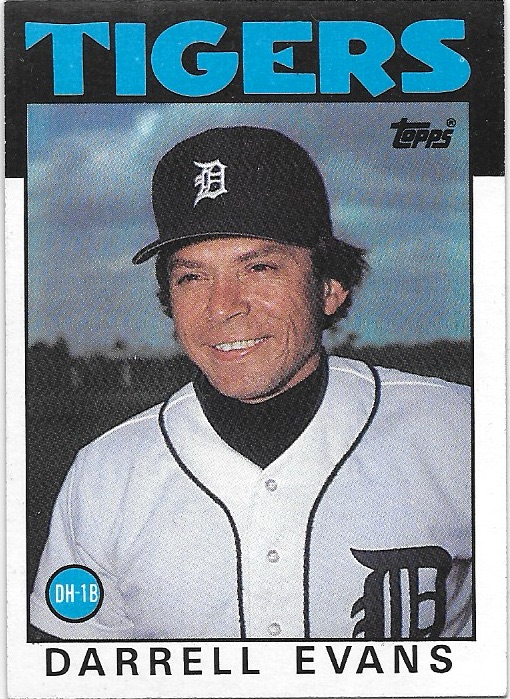
  • Darrell Evans drove in the Tigers lone run on an RBI single in the eighth.

Miscellany

  • Umpires: HP – Tim McClelland, 1B – Don Denkinger, 2B – Mike Reilly, 3B – Rich Garcia
  • Time of Game: 2:33
  • Attendance: 38,597

Birthdays

Colt Keith and the late Mark Fidrych and Skinny Graham

Today’s Grid

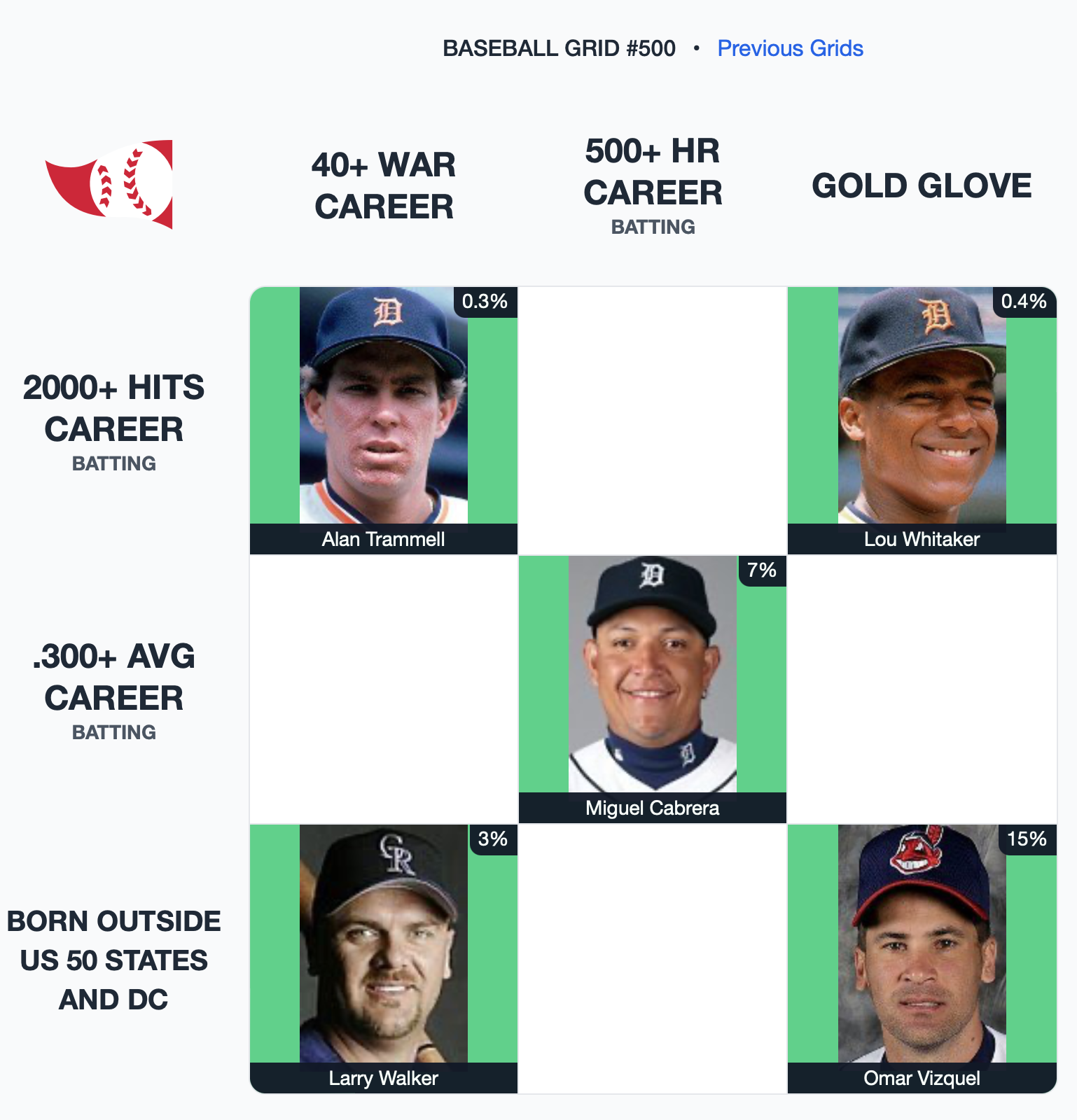
⚾️ Immaculate Grid 500: 5/9 — Rarity: 426

A clunker compared to yesterday.

See you tomorrow.

April 26, 1984: Tigers 7 – Rangers 5

April 26, 1984: Tigers 7 – Rangers 5

W: Doug Bair (2-0) – L: Frank Tanana (2-2) – Save: Aurelio López (2) | Boxscore

Record: 16-1

Highlights

  • No pitching duel in this one. The Tigers ambushed Frank Tanana with five hits and four runs in the first inning. He lasted
  • ‘Twas also a rough start for Dave Rozema: 4.1 IP, 5 runs, 7 hits and 3 home runs.
  • Doug Bair and Señor Smoke carried the load the rest of the way, blanking the Rangers on just four hits.

Miscellany

  • Venue: Arlington Stadium
  • Umpires: HP – Don Denkinger, 1B – Dan Morrison, 2B – Mike Reilly, 3B – Al Clark
  • Time of Game: 2:50
  • Attendance: 13,559

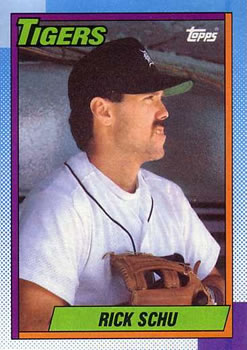
Rick Schu #35

Rick Schu was tasked with replacing Mike Schmidt when he retired from the Phillies. That could not have been fun, nor could it have been fun coming to the 1989 Tigers, who were 14-24 when the club purchased his contract from the Orioles on May 19.

He made his debut on May 21 against the Royals. He started at third and batted ninth, going 1 for 2.

Schu’s final game with the Tigers came on Oct. 1, a 5-3 Tigers win against Yankees to close out a 59-103 season. He went 1 for 4.

His Tigers career ended after 98 games, with a .214 average, seven home runs and 21 RBI. The Tigers released him on Dec. 8, 1989.

Birthdays

Felipe Lira and the late Virgil Trucks and Dale Alexander

See you tomorrow.

🌎 April 22, 1984: Tigers 9 – White Sox 1

1984 Game 13: Tigers 9 – White Sox 1

W: Juan Berenguer (1-0) – L: Tom Brennan (0-1) | Boxscore

Record: 12-1

On a cold and wet Easter Sunday, Juan Berenguer delivered one of his best Tigers starts, at least that I can remember. He gave up just two hits — and didn’t allow one until the fifth — with one walk. He struck out seven.

The Tigers had 18 hits, paced by:

Michigan native and fellow WMU alum first baseman Mike Squires was pressed into pitching duty, with two gone in the five-run eighth, for the final out.

Miscellany

  • Umpires: HP – Nick Bremigan, 1B – Vic Voltaggio, 2B – Joe Brinkman, 3B – Larry McCoy
  • Time of Game: 2:58
  • Attendance: 10,603

Jim Crawford – #28

Lefty Jim Crawford was acquired by the Tigers in a Randy Smith-style trade with the Astros on Dec. 6, 1975. He came to Detroit with Milt May and Dave Roberts for Terry HumphreyMark LemongelloGene Pentz and Leon Roberts.

He appeared in parts of three seasons, 1976-78, as a reliever and spot starter.

Crawford made his Tigers debut on April 20, 1976 against the A’s in Oakland. He came into the game in the ninth, relieving starter Joe Coleman, with the Tigers clinging to a 5-3 lead. Crawford got Bill North to line out but the next batter, Joe Rudi, singled to tie the game. Crawford was lifted for rookie Mark Fidrych who gave up a single to Don Baylor and the A’s won, 6-5.

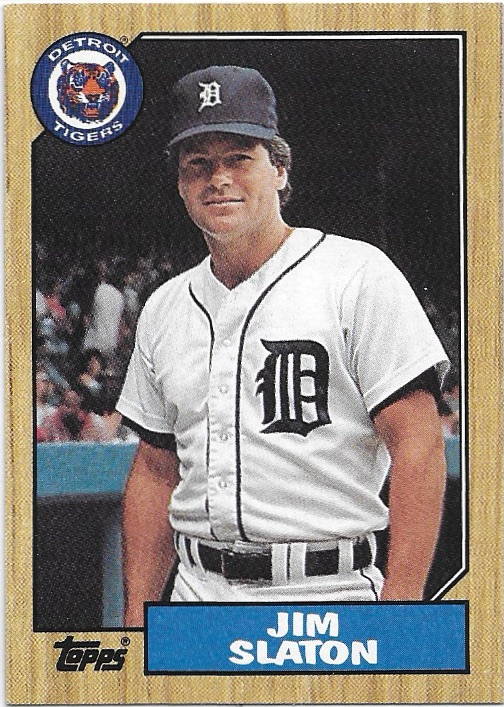
His final game came on July 27, 1978 against the Orioles. Starter Jim Slaton gave up five runs on nine hits in three innings and Crawford came in to pitch the fourth — and gave up two runs of his own on three hits. Jack Morris relieved him with four scoreless.

Crawford’s final line in Detroit: 10-19, 4.62 ERA and 3 saves.

Birthdays

Tyson Ross, David Purcey

See you tomorrow.

April 17, 1984: 🌧️ Rained Out in Detroit

April 17, 1984: 🌧️ Rained Out in Detroit

The rain seemed to follow the Tigers home from Boston, as they were rained out for the third-consecutive game.

Record: STILL 8-0

Pedro Garcia – #3

He didn’t play for the Tigers for very long, just 77 games, but he certainly arrived at the right time: The Year of the Bird.

Here are a few things to know about second baseman Pedro Garcia:

  • The Tigers got him on June 10, 1976 from the Brewers for Gary Sutherland.
  • Garcia finished second in the Rookie of the Year voting in 1973. He hit .245 with 15 homers and a league-leading 32 doubles. Those were the career high-water marks for him offensively.
  • He was hitting .217 in 44 games with the Brewers when he was dealt to Detroit.
  • For the Tigers, he hit .198 with three homers and 20 RBI. In 245 plate appearances, he struck out 40 times with nine walks.
  • The Tigers released him on Dec. 16, 1976.
  • In 1977, he played on the inaugural Toronto Blue Jays team, hitting .208 in 42 games before being released.
  • You can see him play in this classic Monday Night Baseball telecast Mark Fidrych versus the late Ken Holtzman. The Tigers won, 5-1.

Birthdays

Ronny Rodriguez, Ryan Raburn, Max St. Pierre, Pedro Garcia and the late Charlie Jaeger

See you tomorrow.

The Thursday Fungo

Tigers’ Opening Day Record, 1977-1994

The wheelhouse of The Daily Fungo is the Ralph Houk, Les Moss and Sparky Anderson years. So, through that narrow lens in the Tigers’ much broader history, let’s look at how the teams from 1977 through 1994 opened their respective seasons.

* Indicates I was at the game.

YearOpening DayScorePitchers
1977April 7
Home
Boxscore
Royals 7
Tigers 4
W: Paul Splittorff
L: Dave Roberts
Save: Mark Littell
1978April 7
Home
Boxscore
Tigers 6
Blue Jays 2
W: Mark Fidrych
L: Dave Lemanczyk
1979April 7*
Home
Boxscore
Rangers 8
Tigers 2
W: Ferguson Jenkins
L: Dave Rozema
1980April 10
Away
Boxscore
Tigers 5
Royals 1
W: Jack Morris
L: Dennis Leonard
1981April 9*
Home
Boxscore
Tigers 6
Blue Jays 2
W: Jack Morris
L: Joey McLaughlin
1982April 9*
Away
Boxscore
Royals 4
Tigers 2
W: Larry Gura
L: Jack Morris
1983April 5
Away
Boxscore
Tigers 11
Twins 3
W: Jack Morris
L: Brad Havens
1984April 3
Away
Boxscore
Tigers 8
Twins 1
W: Jack Morris
L: Albert Williams
1985April 8
Home
Boxscore
Tigers 5
Indians 4
W: Jack Morris
L: Ernie Camacho
Save: Willie Hernandez
1986April 7*
Home
Boxscore
Tigers 6
Red Sox 5
W: Jack Morris
L: Sammy Stewart
Save: Willie Hernandez
1987April 6*
Home
Boxscore
Yankees 2
Tigers 1
10 innings
W: Dave Righetti
L: Jack Morris
1988April 4
Away
Boxscore
Tigers 5
Red Sox 3
10 innings
W: Jack Morris
L: Lee Smith
Save: Mike Henneman
1989April 4
Away
Rangers 4
Tigers 0
W: Charlie Hough
L: Jack Morris
1990April 9
Away
Boxscore
Red Sox 5
Tigers 2
W: Roger Clemens
L: Jack Morris
Save: Lee Smith
1991April 8
Home
Boxscore
Tigers 6
Yankees 4
W: Paul Gibson
L: Greg Cadaret
Save: Mike Henneman
1992April 6
Home
Boxscore
Blue Jays 4
Tigers 2
W: Jack Morris
L: Bill Gullickson
1993April 5
Away
Boxscore
A’s 9
Tigers 4
W: Bob Welch
L: Mike Moore
Save: Dennis Eckersley
1994April 4
Away
Boxscore
Red Sox 9
Tigers 8
W: Scott Bankhead
L: Storm Davis
Save: Jeff Russell

The result? An even 9 and 9, with Jack Morris notching a 6-4 record — not counting his win against the Tigers on Opening Day 1992 as a member of the Blue Jays.

Birthdays

Craig Paquette and the late Jimmy Barrett

Today’s Grid

⚾️ Immaculate Grid 361 9/9 – Rarity: 69

See you tomorrow.

The Saturday Fungo

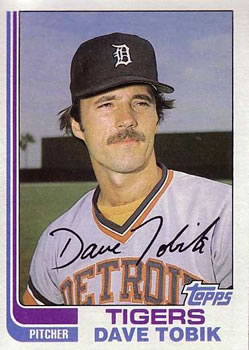
Dave Tobik: 5 Things to Know

Today is Tobik’s 70th birthday. Here are five things you need to know:

  1. RHP Dave Tobik was drafted by the Tigers in the first round, second overall, of the 1975 MLB January Draft-Secondary Phase from Ohio University.

  2. He debuted on Aug. 26, 1978 against the Brewers, a 9-5 loss. His line: 3.0 IP, 6 H, 1 SO, 1 BB, 3 ER.

  3. He first wore number 38, then switched to 45.

  4. The Tigers traded him to the Rangers on March 24, 1983 for Johnny Grubb.

  5. Gist of Tobik’s time in Detroit: 5 seasons, 10-16 record, 3.65 ERA and 13 saves. (He started two games.)

Birthdays

Dave Tobik, Jim Nettles, Jim Brady and the late Chico Hernandez. Check out Brady’s ghastly record — and that equally ghastly Tigers hat in his photo.

Today’s Grid

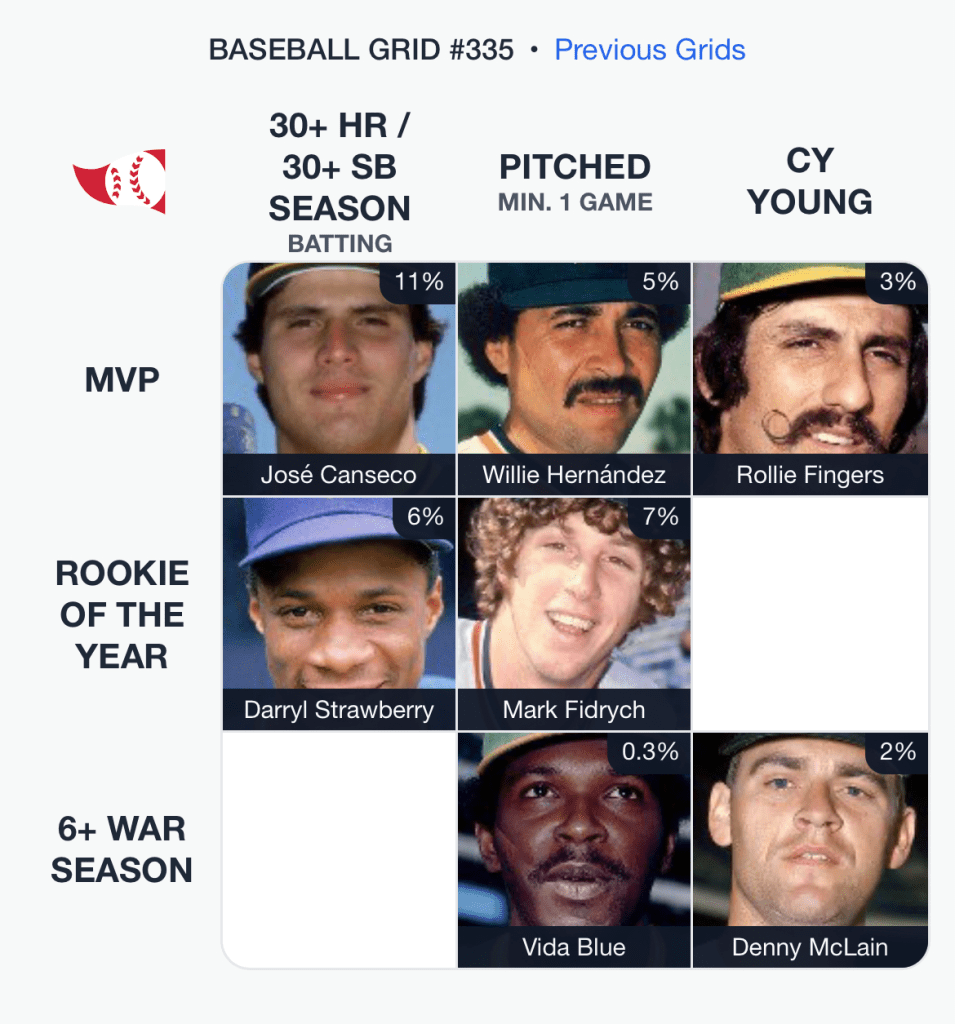
⚾️ Immaculate Grid 335 7/9 — Rarity: 235

See you tomorrow.

Ralph Houk: Bridge between Martin and Anderson (and technically Les Moss)

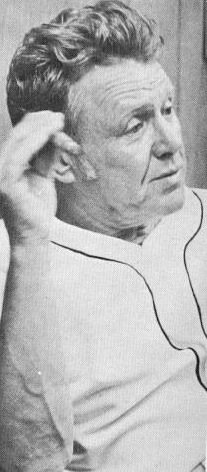
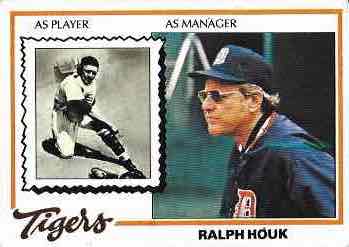
Ralph Houk was the first Tigers manager I ever knew. I paid more attention to the players then – Jason Thompson, Steve Kemp and Aurelio Rodriguez – but I now wish I would have had the attention span to listen to his post-game interviews on Channel 4 or on WJR. I was only nine when baseball appeared on my radar so I’ll have to remember Houk, who died on July 22, 2010, at the age of 90, through the pages of my Tigers Yearbooks and media guides.

Or so I thought.

Thanks to the magic of the Internet, we can piece together Ralph Houk’s arrival in Detroit, where he presided over one of the bleakest periods of baseball in the city’s history, and displayed the least managerial charisma this side of Luis Pujols.

October 1973: Replacing Billy Martin

How bad were the New York Yankees in the early 1970s? Bad enough that their manager left the Bronx for the same job with the Tigers. That might be a stretch, but not by much. The 1973 Tigers finished 85-77, third in the six-team American League East, five games ahead of the 80-82 Yankees. So one could guess that Detroit was actually a step up. It was at least in the view of Ralph Houk, who won 970 games in New York over 10 seasons and was the successor to the legendary Casey Stengel. He would have nowhere near that success with the Tigers.

So, why would he leave New York? According to his obituary in The New York Times, not surprisingly, the reason was The Boss:

In January 1973, a syndicate headed by [George] Steinbrenner bought the team. Under CBS, Houk had a free hand on the field while Lee MacPhail handled the front-office duties. But Steinbrenner let Houk know how he felt things should be done and was overheard making derogatory comments about some of the players.

Houk resigned on the final day of the 1973 season, despite having two years remaining on a contract that paid him in the neighborhood of $75,000 per year. It would be roughly the same amount Tigers GM Jim Campbell would pay him each of the three years on his contract – which at the time made Houk the highest-paid manager in Tigers history.

So what was Houk’s vision when he came to Detroit? To erase “the thin line between losing and winning”, and to rebuild “but not make change for the sake of change.” That’s what he told the AP during his introductory press conference at his Oct. 11, 1973 introductory press conference – at which he was two hours late due to a series of flight delays. (Couldn’t get a direct flight from New York?) “I like the batting power. That’s what always worried me when we played Detroit,” Houk told the UPI.

And he knew of what he spoke: the Tigers trailed only the Indians in 1973 in home runs (157); in 72 they finished third behind Boston and Oakland with 122. Detroit led the league with 179 in 1971.

During his first press conference, Houk also told reporters that he wanted Al Kaline to be his designated hitter in 1974. And Kaline was the Tigers primary DH that season, hitting .262 with 28 doubles, 13 HR, 64 RBI and a .726 OPS in his final season. The mid-1970s didn’t provide Tigers fans much in the way of relevance in the American League East standings. But they weren’t expected to contend. Houk’s job was to develop the Tigers young players and clear the runway for a contender in the 1980s – if not sooner.

Though he was at the helm for one of the most dreadful seasons – 1975, when the club finished 57-102, the fifth-worst season in team history – and one of the most captivating stories of the decade, if not franchise history: Ron LeFlore’s journey from Jackson State Prison to Tiger Stadium.

Houk’s Tigers had nowhere to go but up in 1976 – and they did, winning 17 more games and improving to 74-86. The story in 1976, of course, was Mark Fidrych, who emerged from fringe prospect to national sensation and became the star-attraction on a team filled with journeymen. Fidrych, of course, went 19-9, started the All-Star Game and won the American League Rookie of the Year Award.

Turning the Corner Slowly

It was in 1977 that Houk and the Tigers began introducing fans to the young players that would become the core of the 1984 World Series champions. That season, Alan Trammell, Lou Whitaker, Lance Parrish, Jack Morris and Dan Petry arrived in Detroit to join Kemp and Thompson. The club finished 74-88 in fourth place an improvement over the fifth-place finish in 76 but not really. The expansion Blue Jays joined the American League East that season serving as the rising tide to lift every team in the standings.The Tigers seemed to turn the corner in 1978, finishing with their best record under Houk, 86-76, but dropped to fifth place.

“It’s time for me to go fishing.”

On Sept. 21, 1978, Houk surprised the Tigers when he announced his retirement at the end of the season. The 59-year-old Kansas native wanted to spend his summers at the fishing hole, but on the way out he wanted to stick it to the media, whom he saw as never giving him a fair shake in Detroit.

“The pressure of you people, the press that’s been the toughest thing,” he told the AP when he announced his retirement. Then with a laugh he added, “You can’t slap writers any more. You can’t punch them. You can’t do anything. A lot has changed.”

“I’ve been treated so great here,” Houk was quoted by the UPI. “It’s been an interesting job but the only way I could have stayed here five years was my associations with Mr. Campbell and Mr. Fetzer.” “Truthfully, I did not intend to stay here this long,” Houk said. “It’s been gratifying to me to see some of the young players we have stuck with develop.” Check this out from the same UPI story:

Houk, 59, originally signed a three-year contract to manage the Tigers but it was replaced after 1976 with a unique self-renewing agreement that raised his pay above the average of his contemporaries and provided for additional attendance and club performance bonuses.

It also had a built-in year of severance pay should the contract be terminated by either side. Campbell had said repeatedly Houk could manage the Tigers for as long as he wanted.

Performance bonuses? Attendance clauses? And for all these years we thought the Tigers brass was living in the 1920s. Knowing Campbell’s cheapskate reputation, I’d guess those attendance bonuses were unattainable given the quality of the ball club.

All told, Houk’s Tigers teams won 363 games and lost 443 from 1974-78. Hardly outstanding but probably right in line with what Campbell expected when he hired him.

The Tigers named Les Moss, then the manager of their Triple-A Evansville club, to replace Houk for the 1979 season. As we know, that experiment lasted all of 53 games before the Tigers cut him loose in favor of Sparky Anderson.

Houk returned to the dugout in 1981 as manager of the Red Sox, a job he held until 1984. I remember thinking at the time that it had to be strange for Houk to be back at Tiger Stadium in ’84 watching many of his former players steamroll their way to the World Series. Or gratifying … or both.

By most accounts, Ralph Houk wasn’t a warm human being, particularly with the press, but he was probably the ideal man for the job. And that job was to bridge the gap between the 1968 champions and the next generation of Tigers, the guys who won the World Series in 1984. He’ll never have the legacy of his successor, Sparky Anderson, but Ralph Houk’s place in Tigers history is an important one – if often forgotten.

The End of Denny McLain’s Career Began in 1966

A couple weeks ago, friend of the Fungo Lynn Henning wrote why it made sense to give Justin Verlander an extra day of rest heading into the three-game weekend series against the Indians.

In the column, Henning pointed to specific examples in Tigers history where heavy workloads resulted in truncated careers – among them Mark Fidrych.

Here’s the gist:

[L]et’s talk about some past Tigers history that might help put the Verlander decision in better perspective.

(snip)

Denny McLain won 31 games in 1968 — the only man in the past 77 years to have done so — and 24 the following season.

He won two Cy Young Awards during those two seasons. He won Most Valuable Player in 1968.

He pitched a combined 661 innings — no misprint — during those two campaigns.

He was 25 years old at the end of the ’69 season.

He won 21 games, total, the remainder of his career. His arm had been fried during those two colossal seasons.

I knew pitchers 40 years ago regularly went deep in games and threw a lot of pitches, but McLain’s output in 1966 was staggering.

On Aug. 29, 1966, McLain threw 229 pitches in the Tigers’ 6-3 win over the Orioles. He gave up eight hits, walks nine and struck out 11 Orioles to notch his 16th win. According to the Baseball Reference.com box score, McLain faced 43 batters in the game.

He was just 22 at the time.

In that game, McLain set the Orioles down in order only one time, the bottom of the second. In every other inning he faced, on average, about five hitters per inning.

Did I mention he was only 22?

Three days later, on Sept. 1, McLain faced the Indians in Cleveland and again went the distance, facing 39 batters. He retired the side 1-2-3 twice in the game but otherwise had a similar pattern to his previous start. (The Tigers won, 4-2.)

[callout title= McLain By the Numbers]

13-4 – McLain’s record in the first half of 1966

7-10 – His record in the second half

.214 – Opponents’ batting average against (lefties hit just .199 off him in ’66)

21 – The number of starts McLain made (out of 38) on three-days rest

1.13 – His ERA in the one start he had on two-days rest (one ER over eight innings)

6.16 – His ERA in the first inning

2.52 – His ERA in the ninth inning

8 – The number of starts to begin the season in which McLain pitched seven or more innings

[/callout]

On Sept. 6, McLain pitched nine innings, allowed 11 hits, two runs and struck out six, in an 8-2 win over Washington at Tiger Stadium. He faced 38 Senators hitters in this game, his 18th win.

McLain’s 1966 campaign concluded with him making three starts in the span of eight days. On Sept. 23, he didn’t make it out of the third inning, surrendering eight earned runs on seven hits.

Three days later he went eight innings, allowed one run on four hits against 30 Angels batters on the way to his 20th win.

On Oct. 1, the next-to-last day of the season, McLain would pitch 3 2/3 innings, allowing four earned runs on seven hits. He took the loss, his 14th, 5-2 to the A’s.

Fourteen and a third innings in three days. Totals like that can certainly make it a bit easier to appreciate today’s pitch-count obsessed mindset in baseball.

All told, McLain threw 264 1/3 innings in 1966. Forty years later, a 23-year-old Verlander threw a comparatively meager 186 innings – and there was talk then that he was approaching overworked status.

There’s no chance the Tigers would put such a ridiculous workload on Verlander – or, in a more apt comparison, Rick Porcello, and Lynn Henning’s column makes a good case for why pitch counts matter, even though I admittedly roll my eyes when I hear them mentioned during games.

And a closer look at a season from 45 years ago explains Denny McLain’s precipitous fall from a 31-game winner at the age of 24 to the loser of 22 games three years later, and his departure from baseball when he should have been entering his prime.

Remembering Jim Northrup: My First Big-League Autograph

The first-ever autograph I scored was Jim Northrup’s.

I’m fairly confident the year was 1978 and it was at my baseball banquet at St. Isaac Jogues in St. Clair Shores. Word had spread that there would be a Tigers player at the banquet and I held out hope, despite my brother’s assurances I was nuts, that the Tiger would be Mark Fidrych.

Instead, it was Northrup and I remember thinking, “This guy?”

Of course I knew who he was. I listened over and over to the album (which is now available on CD!) my Dad bought for me, The Year of the Tiger ’68, that chronicled Mayo Smith’s amazing team.

Still, he was no Bird. Or my then-hero Jason Thompson or Steve Kemp.

Ultimately it didn’t matter a whit because I was standing next to a man who played for the Tigers.

My encounter with Northrup was memorable for another reason: I think I annoyed him. We were one of the first families to arrive at the banquet, which was held in the church basement that five days a week served as my school lunchroom. I remember my Mom encouraging me to take the banquet program and asking him for an autograph. So I made a beeline to the little stage area where he was standing by himself and got his impeccably written signature.

A while later a player from my team showed up and he ran over to a table and grabbed a banquet ticket. He asked Northrup to sign it. So enthralled was I about Northrup being there — and mind you, it could’ve been any former Tiger at this point — I took one of the same tickets from that same table and scurried up to the stage and asked him for another autograph.

He looked down at me and said, “How many autographs do you want, kid?”

I was more than a little embarrassed but he winked at me and I didn’t feel so stupid. (As it ends up, the ticket I used for the second autograph belonged to my teammate’s sister and I had to relinquish it to her. No one, it seemed, was pleased with autograph number two.)

[callout title=The Jim Northrup File]

Bats: Left  Throws: Right
Height: 6′ 3″, Weight: 190 lb.

Born: November 241939 in Breckenridge, Mich.
High School: St. Louis (Mich.) High
School: Alma College
Signed
by the Tigers as an amateur free agent in 1960.
Debut: September 30, 1964
Numbers worn with Tigers: 30, 5
Teams (by games played): Tigers/Orioles/Expos 1964-1975
Final Game: September 27, 1975

Tigers Stats (11 seasons): 1,279 games;  .267 avg., 145 HR, 570 RBI, .763 OPS

[/callout]

I don’t remember much about what Northrup said during his after-dinner remarks but I do recall lots of laughter and my parents enjoying his reminscing about the ’68 team.

A few years later I got to know and appreciate Jim Northrup when he was Larry Osterman‘s partner on the old PASS network broadcasts. I can’t verify this but I would be shocked to learn that Northrup did one nanosecond of preparation. What I can guarantee is that no other Tigers announcer in my lifetime was as appropriately critical of players and the plays they made or didn’t make as old number 5. He was, in many ways, the unJim Price and I thoroughly enjoyed every game he called.

More on this from Lynn Henning in his column today:

No question, Northrup was glib and acerbic. So much so, his tongue got him into trouble as much as it got him noticed.

Exhibit A there was his career as a Tigers television announcer. It ended in 1995, and no one had to explain why Northrup was unceremoniously yanked. He was blunt, unapologetically so. A new front-office regime wasn’t interested in subjecting owner Mike Ilitch to Northrup’s reviews, no matter how accurate or welcomed they might have been by a Tigers audience.

Back to the baseball banquet. The event was winding down and we all had our trophies – which we’d earned and not every kid got one. Imagine.

Anyway, my Dad suggested I get an autograph on the bottom of my trophy. I explained I already had asked for two from Northrup and he might get mad. Dad shrugged and said, “Go ask him.”

So I walked up and ever-so meekly asked him to sign the trophy and he just smiled, signed it and as he handed it back to me said, “Way to go.”

From that moment on I was a Jim Northrup fan, though I never saw him play a single game.