The Saturday Fungo

My Top-5 Tigers

Lately I’ve been giving a lot of thought to who my all-time favorite Tigers are and who would make a tidy list.

Putting together my top 10 would be easy. Narrowing it to just five would be tough but I wanted to give it a shot.

What’s the criteria for this list?

I decided that this was my purely subjective list based on players I enjoyed watching play for the Tigers.

For example, Mark Fidrych doesn’t make the list simply because I never saw him play live — and I decided ESPN Classic and MLB Network reruns don’t count.

The legend of The Bird and his place in Tigers lore is secure for me.

Here’s my list* — not in order of favorite-ness, but in order of how they came to mind — which has been revised right up to the moment I clicked “Publish” on this post.

Honorable Mentions

*Always subject to revision.

Birthdays

None!

Today’s Grid

⚾️ Immaculate Grid 356 9/9 – Rarity: 11

See you tomorrow.

The Sunday Fungo ☘️

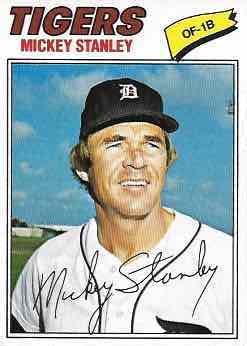
Mickey Stanley – #24

For many fans, Mickey Stanley’s defining moment with the Tigers came in the 1968 World Series when manager Mayo Smith shifted him from the outfield to shortstop — a position he’d played only in nine major-league games.

The move was made specifically to keep Al Kaline in the lineup while adding some pop to the ’68 team’s woeful production at shortstop. Ray Oyler played most at short that year (111 games) but hit just .135, while backups Tom Matchick and Dick Tracewski combined hit .180 (!).

In his terrific bio on Stanley, which appears in the 2008 book Sock It to ‘Em Tigers, Jerry Nechal sums up the new shortstop’s performance in the Series against the Cardinals:

Obviously a quick learner, Stanley went on to amaze the baseball world in the Series. In the first inning of Game 1 he was tested by a leadoff ground ball off the bat of the speedy Lou Brock. Brock was out on a close play and Mickey’s fielding at shortstop became a nonfactor. He successfully handled 30 of 32 chances, making two inconsequential errors.

Mickey Stanley broke in with the Tigers on Sept. 13, 1964, singling in his first at bat off Claude Osteen, and appeared in just four games that season. He played in 30 games the following season before making the big club out of Spring Training in 1966, and soon became a fixture in centerfield for the Tigers until a speedy rookie Ron LeFlore took over in the mid-’70s.

My greatest memory of Stanley comes from Aug. 10, 1977, the first Tigers game I ever attended.

The starting pitcher for the Tigers was rookie Jack Morris who would pitch 7.2 innings on the way to his first major-league win, but he wouldn’t have gotten the win that night without a dazzling play by Stanley with two out in the ninth inning.

With Von Joshua at first, Cecil Cooper stood at the plate as the potential tying run. He launched a pitch from Steve Foucault deep to right field and from my lower deck seats on the first base side, it looked like it would indeed tie the game. Instead, Stanley timed his jump and took away a home run, securing a 5-3 win for the Tigers — and Morris.

And it took no time for me to decide who my favorite Tigers were.

Mickey Stanley retired after the 1978 season, his 15th, after playing in 1,516 games — all with the Tigers.

Birthdays

Vance Wilson and the late Oscar Stanage

Today’s Grid

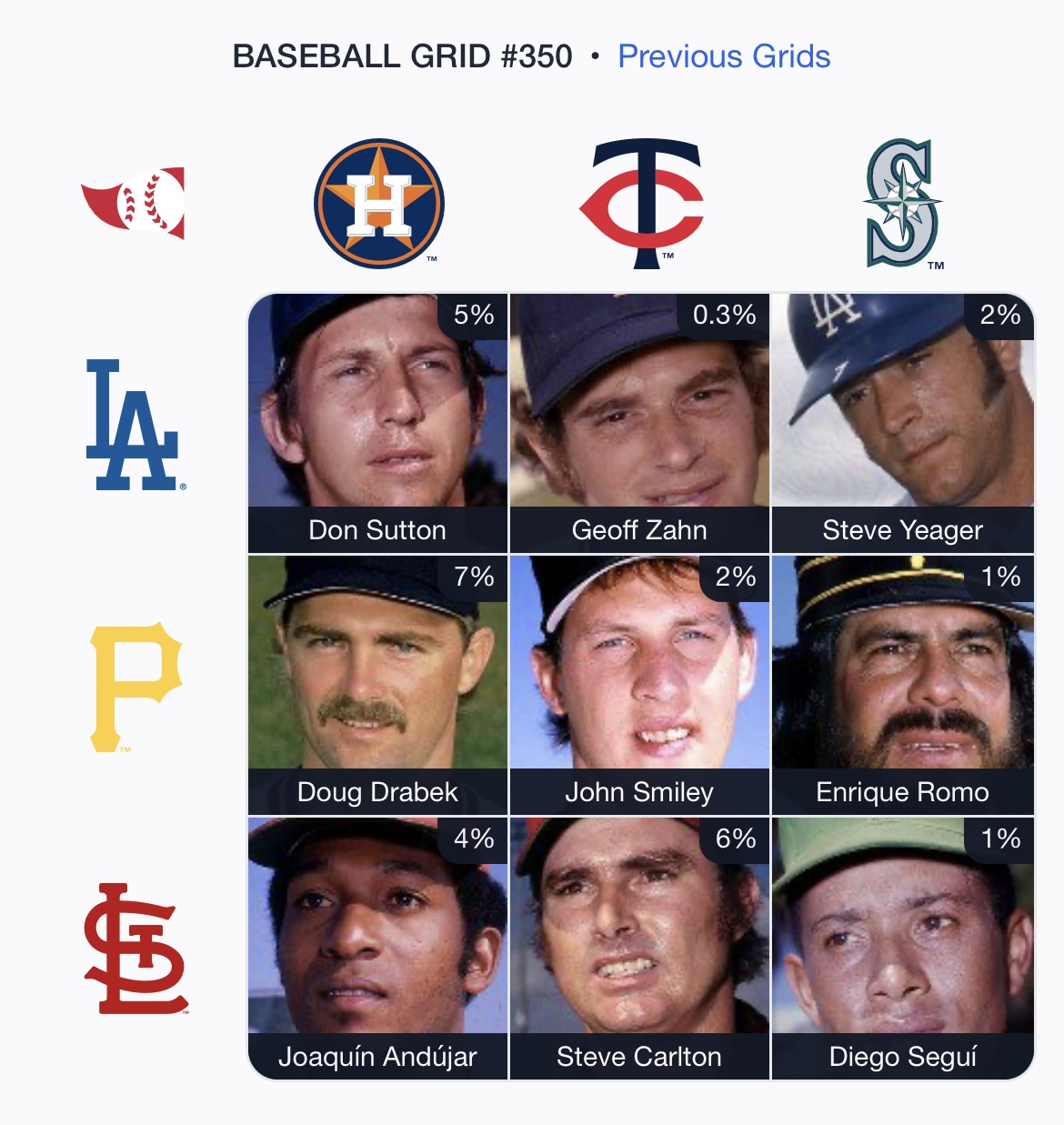
⚾️ Immaculate Grid 350 9/9: Rarity: 29

As I told my pal Doug, add 100 to my rarity score because. out of frustration, I looked at the 1977 Mariners roster to see who I remembered as a Cardinal. For kicks, I dropped him in to see how rare it was — rare!

See you tomorrow.

The Saturday Fungo

Charles Hudson – #27

In retrospect, the 1989 Tigers season was doomed from the start.

The core of the ’84 team was aging or playing elsewhere, and the farm system was dried up.

Thanks to the mirage of 1988’s 88-win, second-place finish, one game behind the Red Sox, there was only the flimsiest of hope that the ’89 team could contend.

Looking back, it’s obvious the club’s immediate and long-term futures were bleak.

So, they made curious deals like trading Tom Brookens to the Yankees for Charles Hudson, on March 23, 1989.

Three or four years earlier, Hudson would have been a shrewd pickup for Bill Lajoie: a veteran arm for rotation insurance or long relief. 

Alas, 1989 was the late ‘80s not the middle, and Hudson was too little too late for a bad, bad team. It wasn’t his fault!

Here are a few things to know about the right-hander’s time in Detroit:

  • Hudson made his Tigers debut on April 11 agains the Twins. Jack Morris started and lasted only until two outs in the fourth — he gave up eight hits, four walks and five runs. Hudson came in and settled things down, tossing three and a third innings, allowing just three hits and a run. Final score: Twins 14 – Tigers 0.
  • His final major-league appearance came on Aug. 11, 1989, against the Rangers in relief of Frank Tanana, was not a bad one: 3.1 IP, two hits, one run, two walks and four strikeouts. The Tigers lost, 7-3.
  • Hudson’s Tigers career: 18 appearances, 7 starts, a 1-5 record with a 6.35 ERA.

Birthdays

Curtis Granderson, Charles Hudson and the late Ralph Works.

Today’s Grid

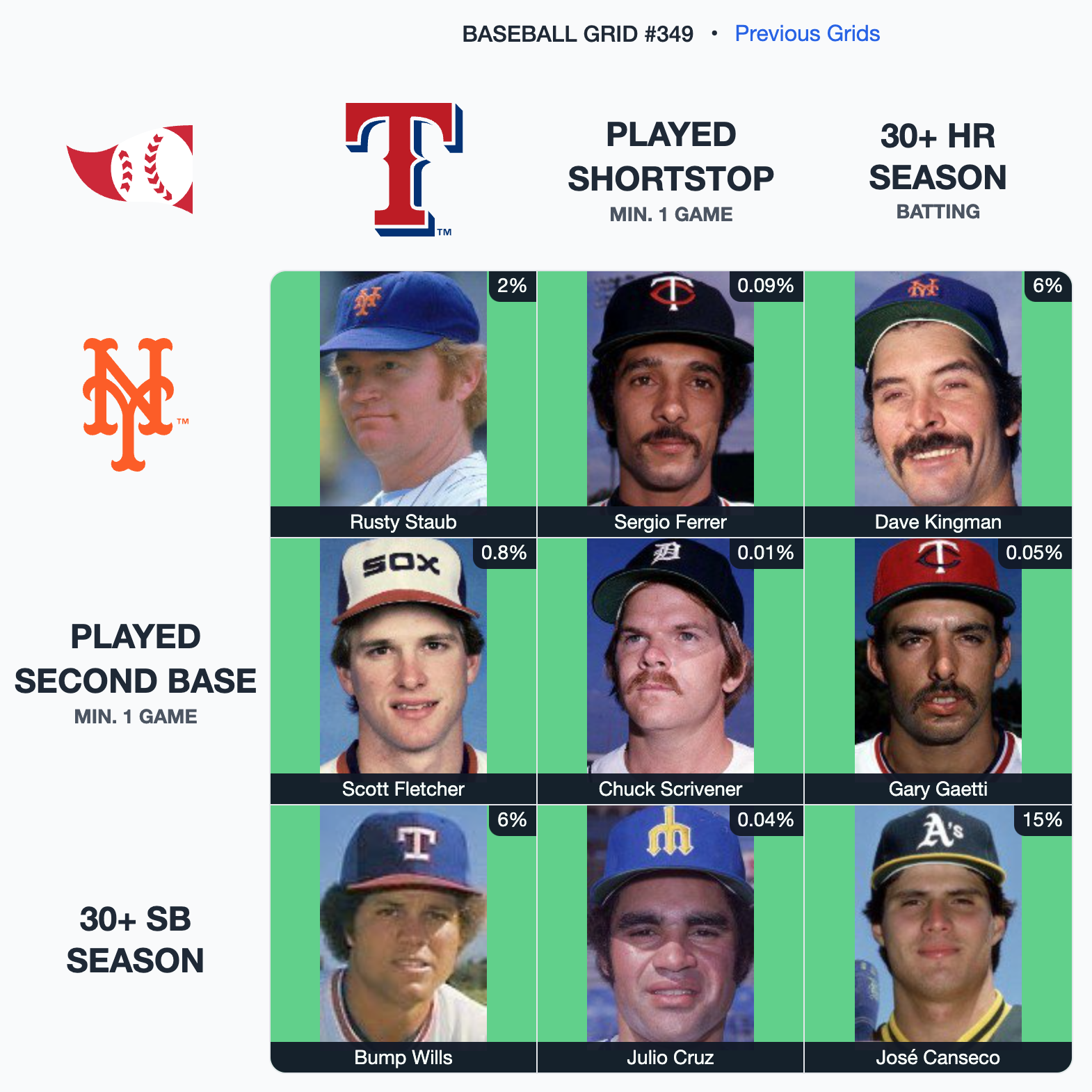
⚾️ Immaculate Grid 349 9/9 — Rarity: 29

I was cruising until the final square, Jose Canseco. Also, three former Tigers in today’s offering.

See you tomorrow.

The Tuesday Fungo

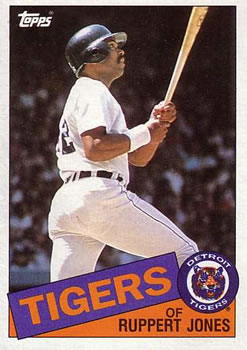
Ruppert Jones – #32

The 1984 season was an embarrassment of riches on so many levels. And when the Tigers signed Ruppert Jones to a minor-league deal on April 10, 1984, it was almost too much to comprehend.

Jones started the year in Evansville for what amounted to an extended spring training. That didn’t stop my friends and me from wondering:

When will he get called up?

Where will he play? 

When will he play?

  • The answer to the first question was early June, after lighting up the American Association, batting .313, 9 HR, 45 RBI and a .986 OPS in his 45 games with the Triplets.
  • The answer to the second question was left field and centerfield, with spot DH duty.
  • As for question three: 79 games. He finished the year with a .284 average, 12 HR, 37 RBI and a .862 OPS. 

In the postseason, Jones played in just four games — ALCS games one and two, and World Series games two and four — and notched only a walk and a run scored in nine plate appearances.

After the ’84 season, the Tigers let him walk — not a popular move in my eyes at the time (or now!). In January 1985, Jones signed with the Angels and played for them until his final big-league game, Oct. 4, 1987.

Check out this full bio on Jones by Adam Ulrey as part of SABR’s Bio Project.

Birthdays

Zach MinerCraig DingmanRuppert JonesLarry Rothschild and the late Eulogio “Frankie” De La Cruz and George Maisel

Today’s Grid

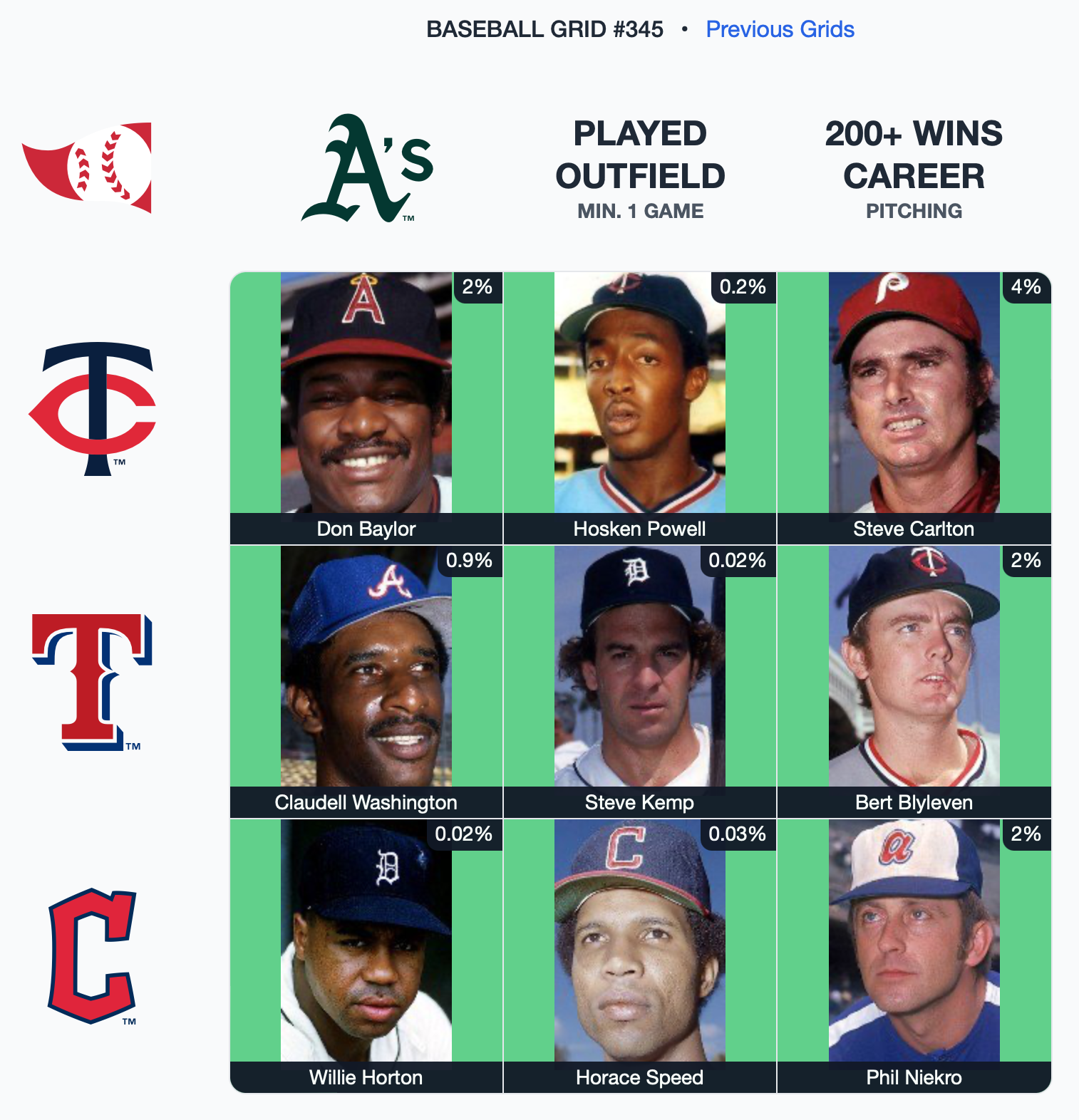
⚾️ Immaculate Grid 345 9/9 — Rarity: 11

If I had put Jack Morris in the top-right square, I could have had a Tigers bottom-right-to-top-left-diagonal Hollywood Squares win situation.

See you tomorrow.

The Sunday Fungo

Chuck Cary – #43

There was a lot of anticipation for what was being sold to Tigers fans as the next wave of homegrown talent behind Jack Morris, Dan Petry, Lance Parrish, Lou Whitaker and Alan Trammell. One player that held promise was lefty Chuck Cary, along with Roger Mason, Randy O’Neal, et al.

Cary debuted on Aug. 22, 1985 against the A’s in Oakland, in a 13-inning game, earning a save with a sparkling line: 1.0 IP, 0 H, 2 K, 0 BB, 0 ER. (The Tigers won 5-3 in a game that featured a pair of soft-tossing lefties: Frank Tanana versus Tommy John.)

Later in his career, Cary was a starter but in Detroit, he worked out of the bullpen. He finished ’85 with 16 appearances, a 0-1 record, two saves, and a 3.42 ERA. The following year he was one of several left-handers on the Tigers staff including Tanana, newly acquired Dave LaPoint, Willie Hernandez, and Mark Thurmond

He appeared in 22 games in 1986, finished 1-2 with a 3.41 ERA. In his 33.2 innings pitched, he allowed 18 runs and 15 walks. The next offseason he was dealt to the Braves, along with O’Neal, for minor leaguer Freddy Tiburcio and Terry Harper.

After two seasons in Atlanta, he signed with the Yankees and pitched in the Bronx from 1989-91. Cary didn’t pitch in the majors in 1992, but in ‘93 appeared in 16 games for the White Sox. His last appearance came on Oct. 2, 1993 against the Indians.

Birthdays

Brent Dlugach, Matt Treanor, A.J. Sager, Chuck Cary, Skeeter Barnes and the late Stephen “Bud” Souchock.

Today’s Grid

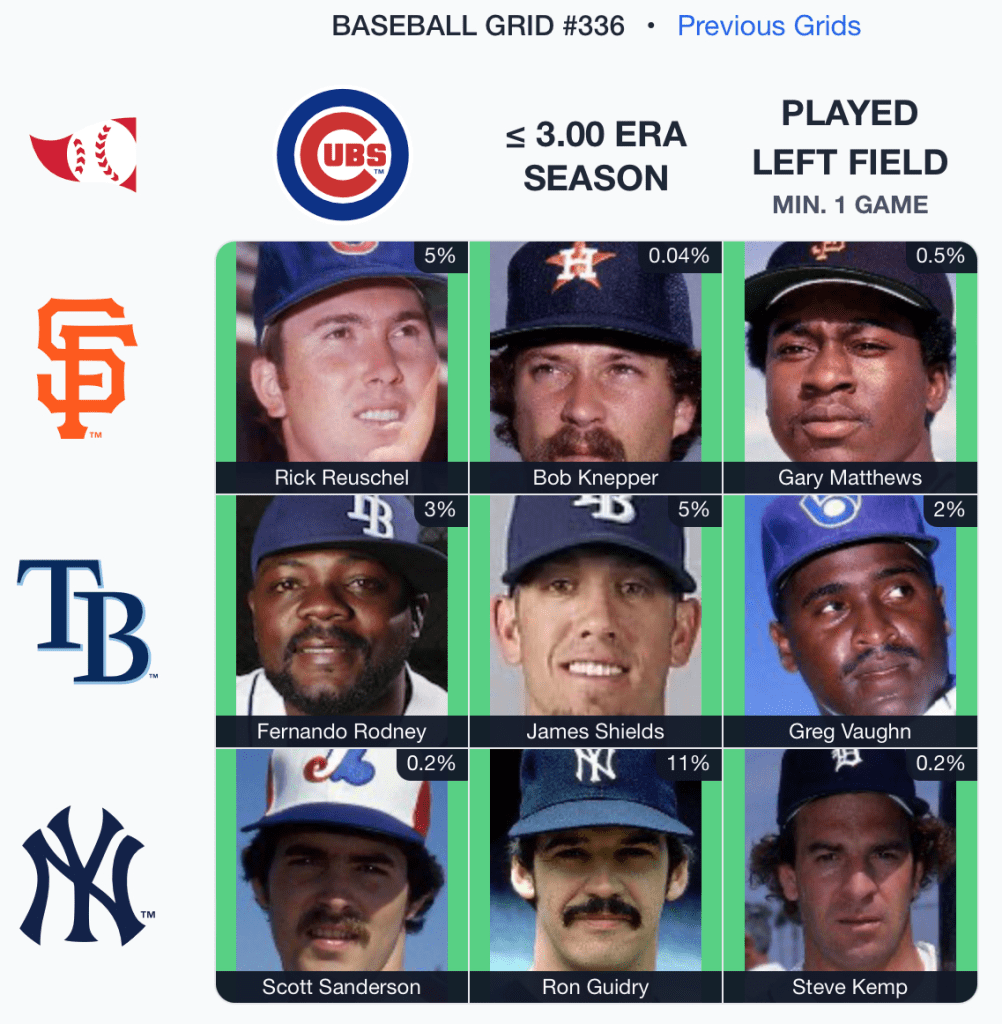
⚾️ Immaculate Grid 336 9/9 — Rarity: 28

See you tomorrow.

The Friday Fungo

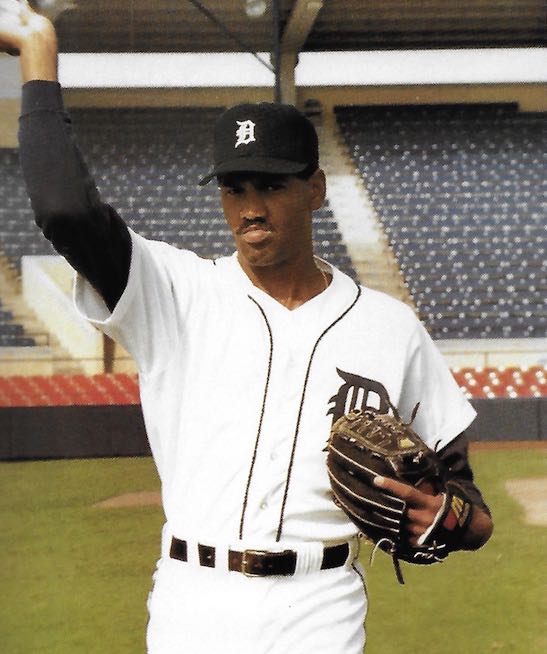
Fernando Valenzuela?

Yes. Briefly.

This blog could not exist without Baseball Reference, and the $80 a year for the ad-free subscription is a steal given how much time I spend on the site. I always seem to uncover some delightful tidbit and lately it seems to be the result of post-Immaculate Grid curiosity.

Today’s discovery might be atop the list, if I kept a list.

Did we know Fernando Valenzuela was, for 75 days, in the Tigers system?

This development leads to a less-intriguing but worthy follow-up question: Did we know Rick Renteria was too?

My answer, at least, is: no!

Random Game: Aug. 13, 1983

Tigers 6 – Yankees 3

W: Jack Morris (14-8) – L: Ron Guidry (13-8) | Boxscore

  • I sat in the upper-deck bleachers, dead center, for this game with my brother, future brother in law, and my friends (to this day!) Rob and Jeff.

  • It could not have been a better stage: A warm August Saturday night, a packed house to see Jack Morris face Ron Guidry in a classic 1980s A.L. East showdown with the teams tied for the division lead.

  • This was the first time in my Tigers fandom that the Tigers were this good, this close to first place, this late in the season — not counting 1981.

  • The game took place a few days after Yankees right fielder Dave Winfield had dispatched a seagull with a warmup toss at Toronto’s Exhibition Stadium. Those of us in the bleachers tormented him with bird-like arm waving. Top-notch hijinks for a 15 year old.

  • We went crazy after the game when the scoreboard showed the standings with the Tigers on top by a game. Insanity.

Highlights

  • The Yankees led 3-2 until the bottom of the seventh when John Wockenfuss launched a homer to left, scoring Larry Herndon, to take a 4-2 lead. (I can still it in my mind, the ball arching in slow motion to left … but now I can’t remember if it was upper or lower deck.)

  • Glenn Wilson hit a two-run double in the eighth to widen the lead to 6-2.

  • Alan Trammell went 4 for 4.

  • Morris went the distance, scattering six hits and striking out 12.

  • According to The New York Times game story by Murray Chass, the loss snapped Guidry’s seven-game Tiger Stadium winning streak. The Tigers had last beaten him in Detroit May 21, 1979, 3-1.

Miscellany

  • Umpires: HP – Al Clark, 1B – Bill Kunkel, 2B – Richard Shulock, 3B – Derryl Cousins.
  • Time of Game: 2:27
  • Attendance: 50,016
  • Start Time Weather: 76° F

Birthdays

José Valdez, Joe Mantiply, Jimmy Hurst, Doug Creek, Kris Keller and the late Tim Thompson

Today’s Grid

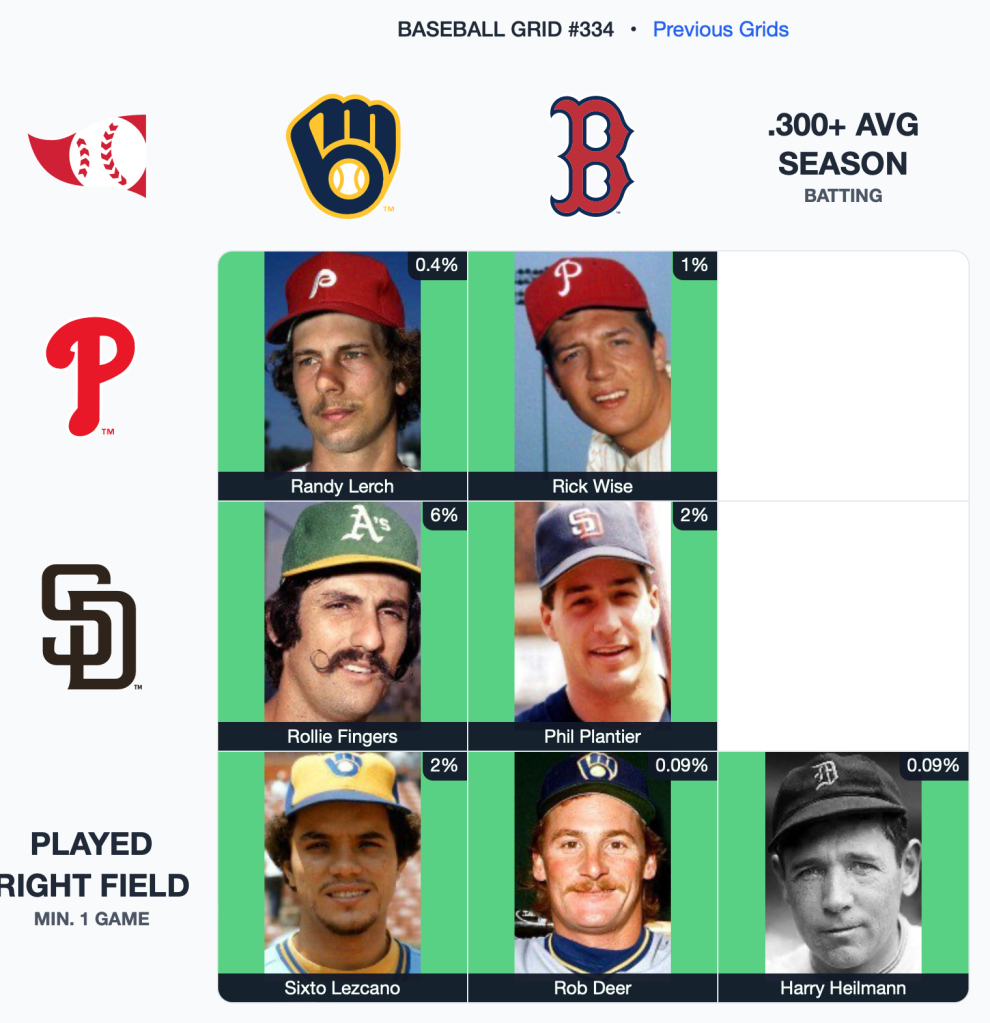
⚾️ Immaculate Grid 334 7/9 — Rarity: 212

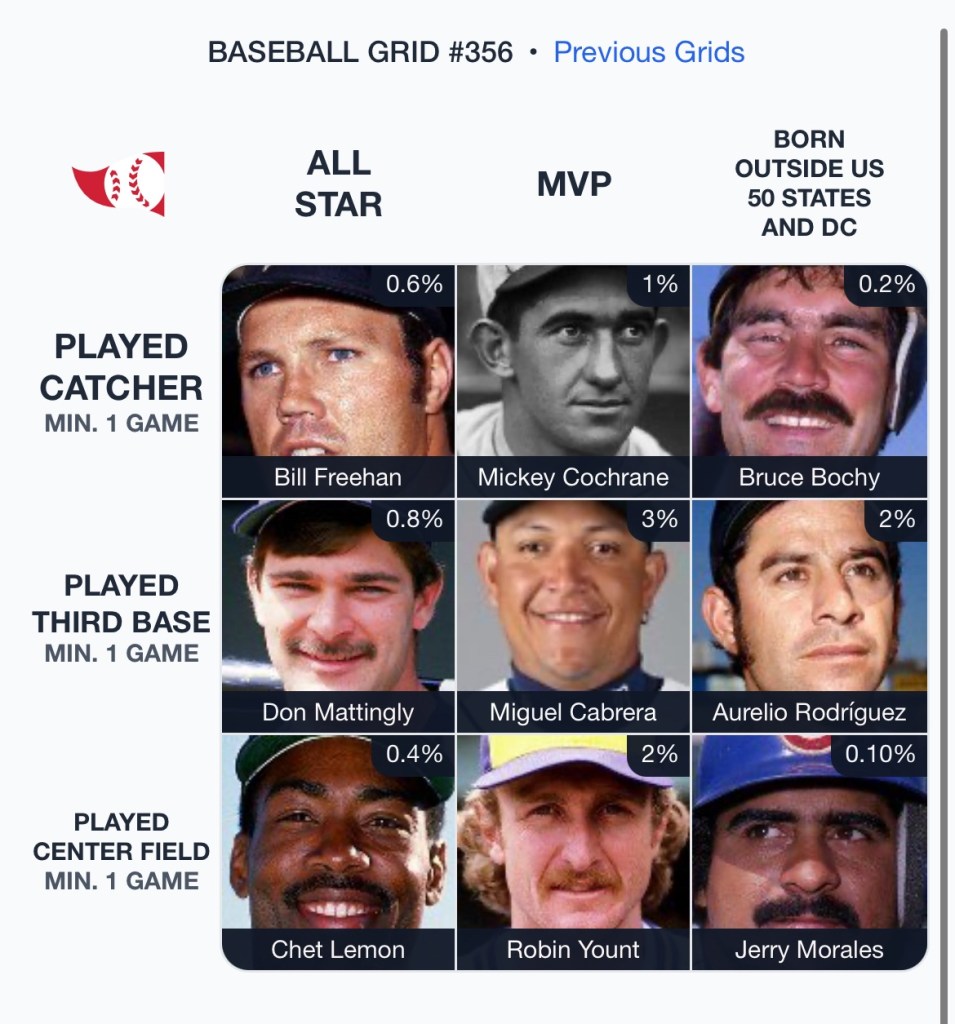
Swings and misses include: Jerry Morales and Scott Rolen. But a couple of former Tigers*.

*Phil Plantier, in a classic Randy Smith move, was dealt away before he ever appeared in a regular season game for the Tigers.

Have a great weekend. We’ll see you tomorrow.

The Thursday Fungo

On this Date in 2000

Sparky Anderson and Detroit Stars slugger Norman (Turkey) Stearnes were elected to the Hall of Fame by the Veterans Committee.

Random Game: April 6, 1992

Blue Jays 4 – Tigers 2

Jack Morris starting an Opening Day at Tiger Stadium for the visiting team was certainly different.  As usual, he went the distance, giving up ninth-inning homers to Cecil Fielder and Rob Deer.

W: Jack MorrisL: Bill Gullickson | Boxscore

  • Monday, April 6, 1992
  • Attendance: 51,068
  • Venue: Tiger Stadium
  • Game Duration: 2:46
  • Recap

    • Dave Winfield had three hits for the Jays.
    • Travis Fryman had a pair of hits.
    • Speaking of Rob Deer, this was the quintessential Deer performance: 1 for 4, three strikeouts to go with the homer.
    • Recently acquired Les Lancaster made his Tigers debut with a scoreless ninth.

    Birthdays

    He hasn’t made the Tigers yet, but Bligh Madris has a Leap Day® birthday.

    Today’s Grid

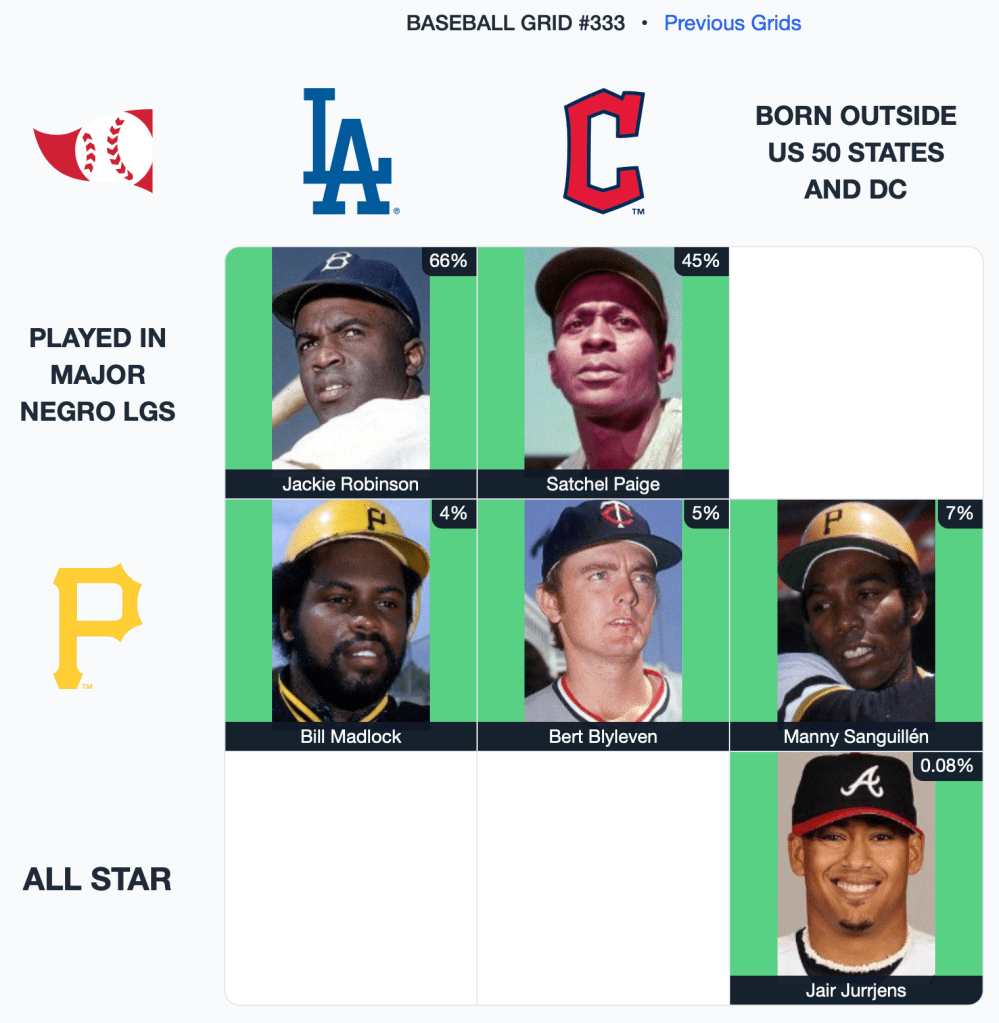
    ⚾️ Immaculate Grid 333 6/9 — Rarity: 427

    Abysmal. But! A nice Hail Mary in the bottom right corner.

    See you tomorrow.

The Monday Fungo: Feb. 12

On TV: Tigers vs. Red Sox – June 25, 1985

Jack Morris vs. Bob Ojeda — and what a great lineup. Here’s the boxscore.

Birthdays

Gary Knotts, Chet Lemon, Pat Dobson, Andy Harrington, Harry Arndt.

Weekend Leftovers

Saturday

Happy 75th birthday to Ben Oglivie who, after the Tigers inexplicably traded him for Jim Slaton and Rich Folkers, went on to hit 176 home runs for the Brewers over nine years. He retired after the 1986 season with a lifetime average of .273 and 235 career homers.

The late Tom Veryzer was born on Feb. 11, 1953. He played five years in Detroit (1973-77) before being dealt to Cleveland for Charlie Spikes. His last year in the bigs was 1984 when he was a bench rider for the Cubs. Had Leon Durham fielded a grounder more cleanly in the NLCS that year, perhaps Veryzer could’ve ended his career where it started, at Tiger Stadium. His final career numbers: .241 average, 14 homers, 231 RBI, .966 fielding percentage.

Today’s Grid

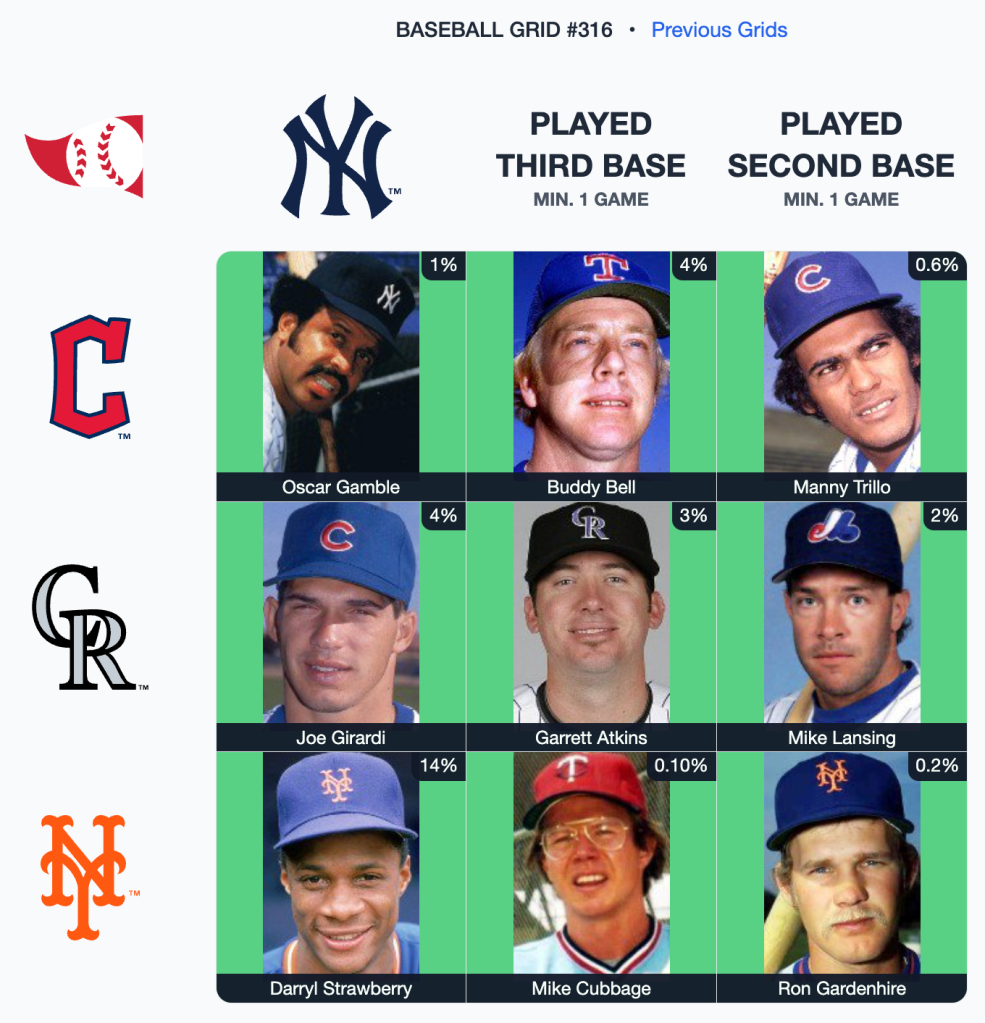
⚾️ Immaculate Grid 316 9/9: Rarity: 30

Two former Tigers managers today.

See you tomorrow.

Ralph Houk: Bridge between Martin and Anderson (and technically Les Moss)

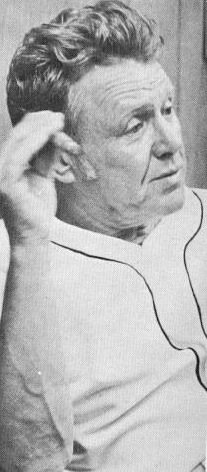
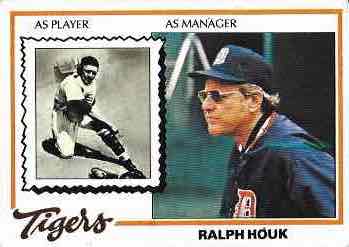
Ralph Houk was the first Tigers manager I ever knew. I paid more attention to the players then – Jason Thompson, Steve Kemp and Aurelio Rodriguez – but I now wish I would have had the attention span to listen to his post-game interviews on Channel 4 or on WJR. I was only nine when baseball appeared on my radar so I’ll have to remember Houk, who died on July 22, 2010, at the age of 90, through the pages of my Tigers Yearbooks and media guides.

Or so I thought.

Thanks to the magic of the Internet, we can piece together Ralph Houk’s arrival in Detroit, where he presided over one of the bleakest periods of baseball in the city’s history, and displayed the least managerial charisma this side of Luis Pujols.

October 1973: Replacing Billy Martin

How bad were the New York Yankees in the early 1970s? Bad enough that their manager left the Bronx for the same job with the Tigers. That might be a stretch, but not by much. The 1973 Tigers finished 85-77, third in the six-team American League East, five games ahead of the 80-82 Yankees. So one could guess that Detroit was actually a step up. It was at least in the view of Ralph Houk, who won 970 games in New York over 10 seasons and was the successor to the legendary Casey Stengel. He would have nowhere near that success with the Tigers.

So, why would he leave New York? According to his obituary in The New York Times, not surprisingly, the reason was The Boss:

In January 1973, a syndicate headed by [George] Steinbrenner bought the team. Under CBS, Houk had a free hand on the field while Lee MacPhail handled the front-office duties. But Steinbrenner let Houk know how he felt things should be done and was overheard making derogatory comments about some of the players.

Houk resigned on the final day of the 1973 season, despite having two years remaining on a contract that paid him in the neighborhood of $75,000 per year. It would be roughly the same amount Tigers GM Jim Campbell would pay him each of the three years on his contract – which at the time made Houk the highest-paid manager in Tigers history.

So what was Houk’s vision when he came to Detroit? To erase “the thin line between losing and winning”, and to rebuild “but not make change for the sake of change.” That’s what he told the AP during his introductory press conference at his Oct. 11, 1973 introductory press conference – at which he was two hours late due to a series of flight delays. (Couldn’t get a direct flight from New York?) “I like the batting power. That’s what always worried me when we played Detroit,” Houk told the UPI.

And he knew of what he spoke: the Tigers trailed only the Indians in 1973 in home runs (157); in 72 they finished third behind Boston and Oakland with 122. Detroit led the league with 179 in 1971.

During his first press conference, Houk also told reporters that he wanted Al Kaline to be his designated hitter in 1974. And Kaline was the Tigers primary DH that season, hitting .262 with 28 doubles, 13 HR, 64 RBI and a .726 OPS in his final season. The mid-1970s didn’t provide Tigers fans much in the way of relevance in the American League East standings. But they weren’t expected to contend. Houk’s job was to develop the Tigers young players and clear the runway for a contender in the 1980s – if not sooner.

Though he was at the helm for one of the most dreadful seasons – 1975, when the club finished 57-102, the fifth-worst season in team history – and one of the most captivating stories of the decade, if not franchise history: Ron LeFlore’s journey from Jackson State Prison to Tiger Stadium.

Houk’s Tigers had nowhere to go but up in 1976 – and they did, winning 17 more games and improving to 74-86. The story in 1976, of course, was Mark Fidrych, who emerged from fringe prospect to national sensation and became the star-attraction on a team filled with journeymen. Fidrych, of course, went 19-9, started the All-Star Game and won the American League Rookie of the Year Award.

Turning the Corner Slowly

It was in 1977 that Houk and the Tigers began introducing fans to the young players that would become the core of the 1984 World Series champions. That season, Alan Trammell, Lou Whitaker, Lance Parrish, Jack Morris and Dan Petry arrived in Detroit to join Kemp and Thompson. The club finished 74-88 in fourth place an improvement over the fifth-place finish in 76 but not really. The expansion Blue Jays joined the American League East that season serving as the rising tide to lift every team in the standings.The Tigers seemed to turn the corner in 1978, finishing with their best record under Houk, 86-76, but dropped to fifth place.

“It’s time for me to go fishing.”

On Sept. 21, 1978, Houk surprised the Tigers when he announced his retirement at the end of the season. The 59-year-old Kansas native wanted to spend his summers at the fishing hole, but on the way out he wanted to stick it to the media, whom he saw as never giving him a fair shake in Detroit.

“The pressure of you people, the press that’s been the toughest thing,” he told the AP when he announced his retirement. Then with a laugh he added, “You can’t slap writers any more. You can’t punch them. You can’t do anything. A lot has changed.”

“I’ve been treated so great here,” Houk was quoted by the UPI. “It’s been an interesting job but the only way I could have stayed here five years was my associations with Mr. Campbell and Mr. Fetzer.” “Truthfully, I did not intend to stay here this long,” Houk said. “It’s been gratifying to me to see some of the young players we have stuck with develop.” Check this out from the same UPI story:

Houk, 59, originally signed a three-year contract to manage the Tigers but it was replaced after 1976 with a unique self-renewing agreement that raised his pay above the average of his contemporaries and provided for additional attendance and club performance bonuses.

It also had a built-in year of severance pay should the contract be terminated by either side. Campbell had said repeatedly Houk could manage the Tigers for as long as he wanted.

Performance bonuses? Attendance clauses? And for all these years we thought the Tigers brass was living in the 1920s. Knowing Campbell’s cheapskate reputation, I’d guess those attendance bonuses were unattainable given the quality of the ball club.

All told, Houk’s Tigers teams won 363 games and lost 443 from 1974-78. Hardly outstanding but probably right in line with what Campbell expected when he hired him.

The Tigers named Les Moss, then the manager of their Triple-A Evansville club, to replace Houk for the 1979 season. As we know, that experiment lasted all of 53 games before the Tigers cut him loose in favor of Sparky Anderson.

Houk returned to the dugout in 1981 as manager of the Red Sox, a job he held until 1984. I remember thinking at the time that it had to be strange for Houk to be back at Tiger Stadium in ’84 watching many of his former players steamroll their way to the World Series. Or gratifying … or both.

By most accounts, Ralph Houk wasn’t a warm human being, particularly with the press, but he was probably the ideal man for the job. And that job was to bridge the gap between the 1968 champions and the next generation of Tigers, the guys who won the World Series in 1984. He’ll never have the legacy of his successor, Sparky Anderson, but Ralph Houk’s place in Tigers history is an important one – if often forgotten.

The Case for Jack Morris – and Everyone Else

Scott Raab of Esquire lobs this grenade into the Jack Morris/Hall of Fame discussion:

The Baseball Writers’ Association of America was founded in 1908 and boasts more than 800 members, many of whom were hypnotized at some point during the 1980s and programmed to vote Jack Morris into the Hall of Fame because — they really say this — “Jack Morris knew how to win,” which means that although Jack’s numbers aren’t dazzling in the context of Cooperstown, he had grit, and he was savvy, and he was a warrior, a legend, one of the best big-game pitchers baseball has ever seen.

In the other corner, living in their parents’ basements: the Sons of Bill James … He is Yahweh to a 30-year generation of dweebs, baseball writers and broadcasters, and general managers, and there is a general consensus among them that — based on a fair, square preponderance of data — Jack Morris, while a very good pitcher, was not among the very greatest, and is thus unworthy of the Hall.

Read the rest here.