The Wednesday Fungo

Tito Fuentes – #3 and #44
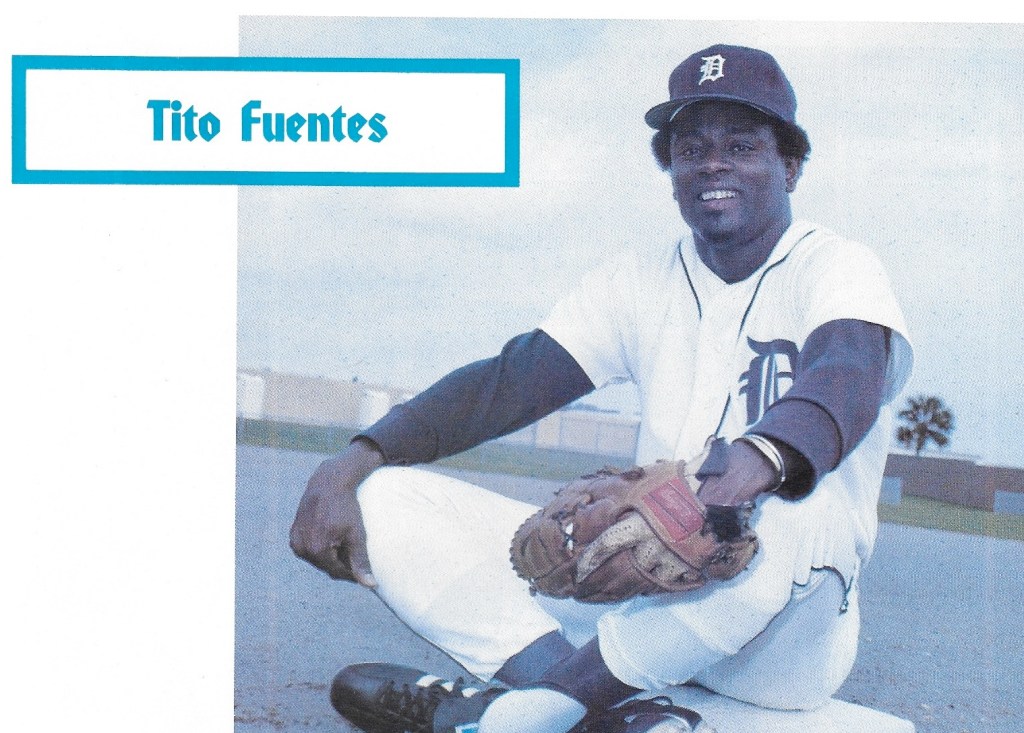
From the 1977 Tigers Yearbook

When the Tigers sought a player to oversee second base until Lou Whitaker was ready, they could have done a lot worse than Rigoberto “Tito” Fuentes.

Offensively, that is.

The switch-hitting 33-year-old trailed only Ron LeFlore‘s team-leading .325 average that season but was brutal in the field. He led all American League second baseman with 26 errors, and posted a .970 fielding percentage.

Fans that remember Fuentes’ brief stop in Detroit are more likely to recall his signature bat flip when he approached the plate, tapping the bat handle on the plate, flipping it up and catching it at the handle. This was a move widely imitated during Wiffle Ball games in my neighborhood, and probably others around Detroit, too.

After his one season with the Tigers, his contract was purchased by the Expos, who promptly released him in Spring Training in 1978.

The Tigers were ready to hand second base to Whitaker but picked up infielder Steve Dillard just in case.

Upon Fuentes’ departure, Jim Campbell had some interesting things to say in the Associated Press story:

“I’m not going to knock Tito,” said Tigers General Manager Jim Campbell. “He did a good job for us, especially offensively.

“Dillard does some things better than Tito,” Campbell said. “He’s a better fielding second baseman than Tito, he covers more ground. And he runs better than Tito did.”

Good thing he didn’t want to knock Tito.

Of course, the truth about Fuentes’ brief tenure in Detroit is probably somewhere in this paragraph from the AP story:

There also had been reports that he was haggling with Campbell over a new contract. Fuentes’ salary demands were reported to be in the $200,000 range.

Just ask Rusty Staub or Steve Kemp how receptive Campbell was to salary “demands.”

Fuentes spent the 1978 season, his last in the majors, with the A’s.

Oh, and if you were curious whether Dillard’s range and fielding were better: they weren’t. His fielding percentage of .958 was 12 points worse. But at least he was a better runner.

Birthdays

Will Brunson, Steve McCatty, Chuck Seelbach and the late Vern Kennedy and Paddy Greene

Today’s Grid

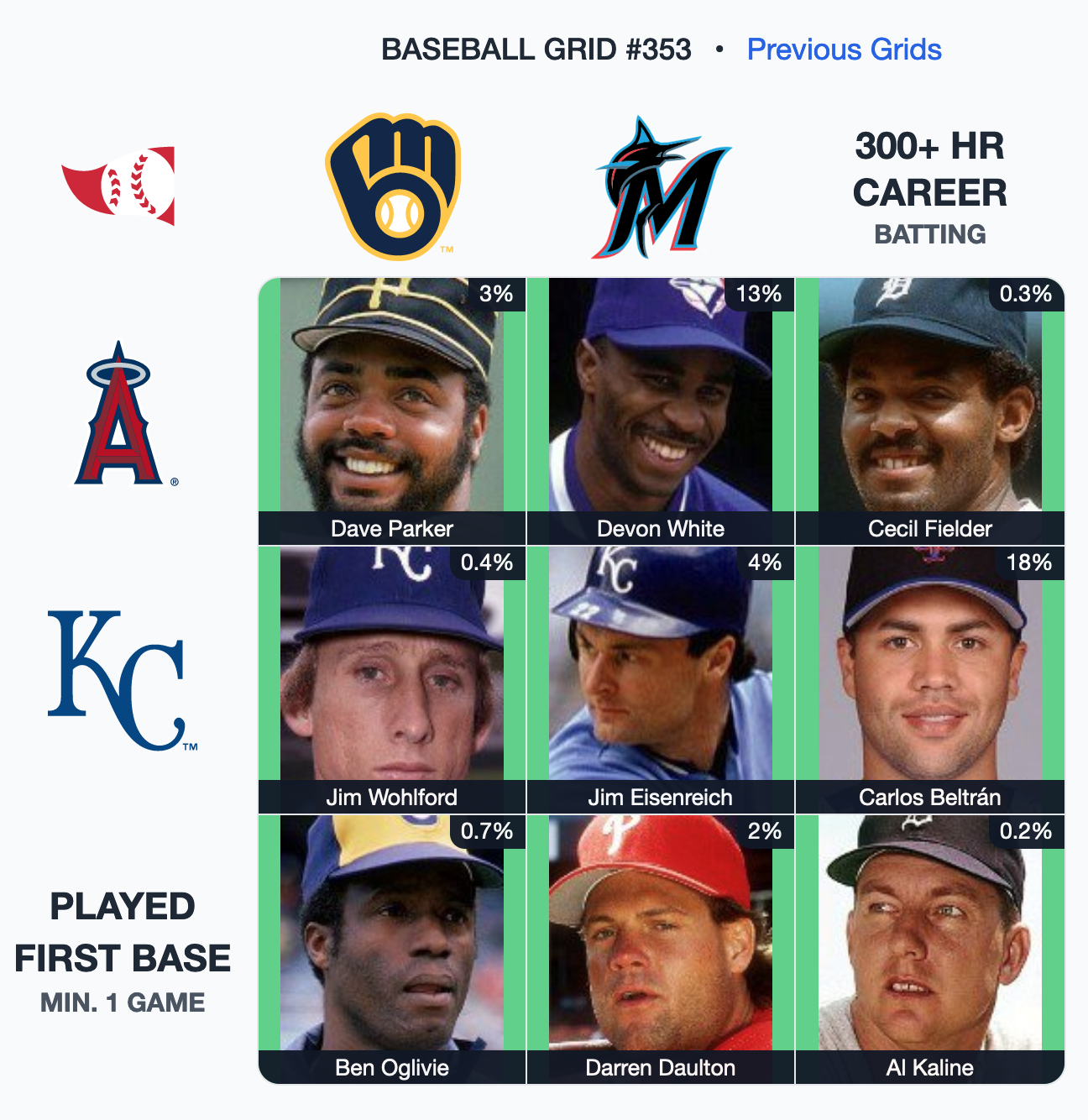
⚾️ Immaculate Grid 353 9/9 – Rarity: 40

A trio of former Tigers today.
See you tomorrow.

The Tuesday Fungo

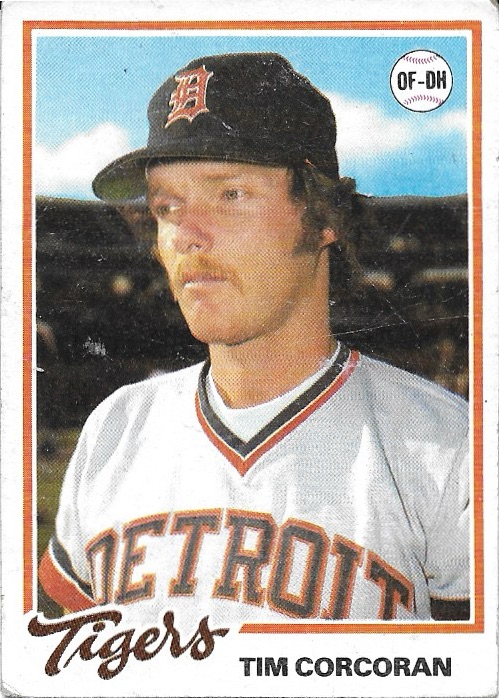
Tim Corcoran – #25

Fifty years ago this June, the Tigers signed Tim Corcoran as an amateur free agent, and he started hitting as soon as he got to Lakeland (.270) and Bristol (.370).

In 1975, Corcoran was promoted to Double-A Montgomery and hit .245 with a .666 OPS, but in ’76 he hit 64 points higher with a solid OPS: .309 / .811.

  • Corcoran made his Tigers debut on May 18, 1977, against Gaylord Perry and the Rangers. As Ralph Houk’s DH, he walked in his first big-league at bat and scored, but went 0 for 3 in a 6-3 loss.
  • The left-handed hitter played parts of four seasons with the Tigers as an outfielder/DH/first baseman combo.
  • From 1977-80, Corcoran appeared in 273 games for Detroit, with a final line of:
AverageHitsHome RunsRBIOPS
.272164766.690
  • He spent most of the 1981 season in Evansville where all he did was hit: .298 average, an .826 OPS and 100 hits in 106 games. Still, it wasn’t enough to last in Detroit.
  • On Sept. 4, 1981, the Tigers sent him to the Twins as the player to be named later in the Aug. 23 trade for Ron Jackson.
  • After spending time with the Twins and getting decent playing time with the Phillies from 1983-85, Corcoran’s final major-league appearance came on June 6, 1986 with the Mets. In ’87 and ’88, he played for the Triple-A Maine Phillies.

Birthdays

Tim Corcoran, the late Gee Walker, Tex Covington and Billy Maharg*

*Check out Maharg’s career

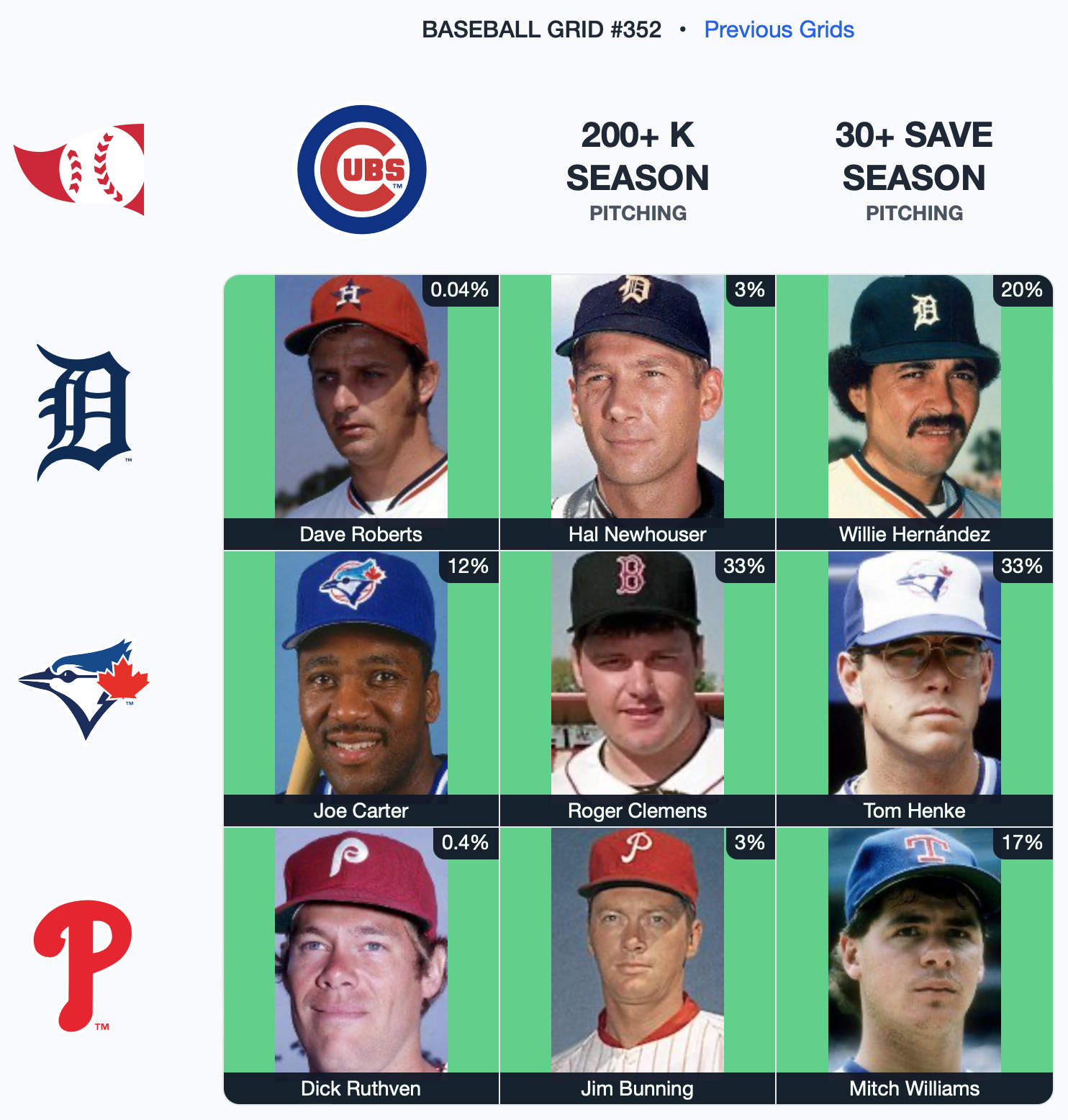
Today’s Grid

⚾️ Immaculate Grid 352 9/9 — Rarity: 121

See you tomorrow.

The Monday Fungo

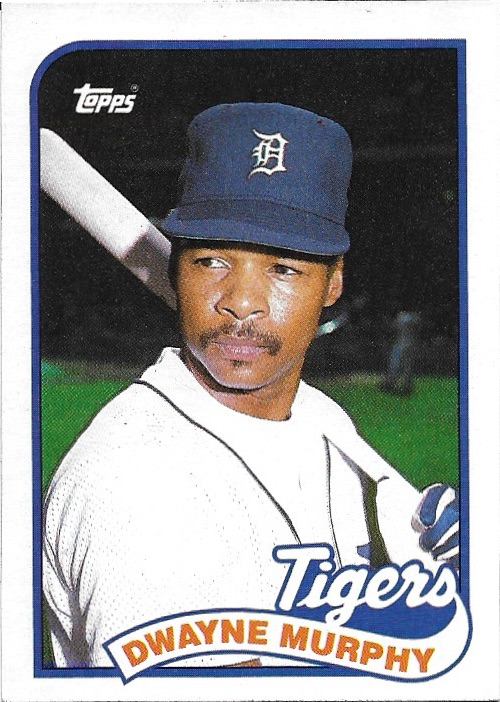
Dwayne Murphy – #18

For more than 10 seasons, Dwyane Murphy was a mainstay in the Oakland lineup, roaming centerfield (a six-time Gold Glove winner), for seven managers: Bobby Winkles, Jack McKeon, Billy Martin, Steve Boros, Jackie Moore, Jeff Newman and Tony La Russa.

The Tigers picked him up on June 5, 1988 after the A’s, released him. His time in Detroit was brief, but long enough to get a Topps card. Here the gist:

  • 49 games, .250 average, 4 HR, 19 RBI, .729 OPS
  • He made a splash in is first Tigers game, July 31, 1988, in a 5-1 win over the Rangers: Batting seventh, he went 2 for 3 with an RBI and a run scored. He played in center with Chet Lemon shifting to right.
  • Sparky slotted him mostly in center but Murphy made appearances in left and right, too.
  • In his last game with Detroit, Oct. 2, 1988, he batted second and went 0 for 4.
  • The Tigers released him at the end of Spring Training in 1989. In early April he signed with the Phillies and played 98 games in his final big league season.

Birthdays

Fernando Rodney, Geronimo Berroa, Dwayne Murphy and the late Dick Littlefield, Fred Hatfield, Hal White, Eddie Lake, Al Benton, Wiley Taylor

Today’s Grid

⚾️ Immaculate Grid 351 9/9 — Rarity: 42

See you tomorrow.

The Sunday Fungo ☘️

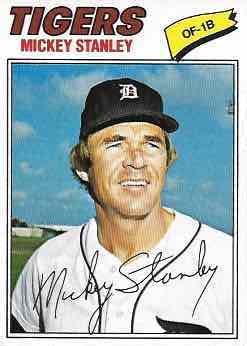
Mickey Stanley – #24

For many fans, Mickey Stanley’s defining moment with the Tigers came in the 1968 World Series when manager Mayo Smith shifted him from the outfield to shortstop — a position he’d played only in nine major-league games.

The move was made specifically to keep Al Kaline in the lineup while adding some pop to the ’68 team’s woeful production at shortstop. Ray Oyler played most at short that year (111 games) but hit just .135, while backups Tom Matchick and Dick Tracewski combined hit .180 (!).

In his terrific bio on Stanley, which appears in the 2008 book Sock It to ‘Em Tigers, Jerry Nechal sums up the new shortstop’s performance in the Series against the Cardinals:

Obviously a quick learner, Stanley went on to amaze the baseball world in the Series. In the first inning of Game 1 he was tested by a leadoff ground ball off the bat of the speedy Lou Brock. Brock was out on a close play and Mickey’s fielding at shortstop became a nonfactor. He successfully handled 30 of 32 chances, making two inconsequential errors.

Mickey Stanley broke in with the Tigers on Sept. 13, 1964, singling in his first at bat off Claude Osteen, and appeared in just four games that season. He played in 30 games the following season before making the big club out of Spring Training in 1966, and soon became a fixture in centerfield for the Tigers until a speedy rookie Ron LeFlore took over in the mid-’70s.

My greatest memory of Stanley comes from Aug. 10, 1977, the first Tigers game I ever attended.

The starting pitcher for the Tigers was rookie Jack Morris who would pitch 7.2 innings on the way to his first major-league win, but he wouldn’t have gotten the win that night without a dazzling play by Stanley with two out in the ninth inning.

With Von Joshua at first, Cecil Cooper stood at the plate as the potential tying run. He launched a pitch from Steve Foucault deep to right field and from my lower deck seats on the first base side, it looked like it would indeed tie the game. Instead, Stanley timed his jump and took away a home run, securing a 5-3 win for the Tigers — and Morris.

And it took no time for me to decide who my favorite Tigers were.

Mickey Stanley retired after the 1978 season, his 15th, after playing in 1,516 games — all with the Tigers.

Birthdays

Vance Wilson and the late Oscar Stanage

Today’s Grid

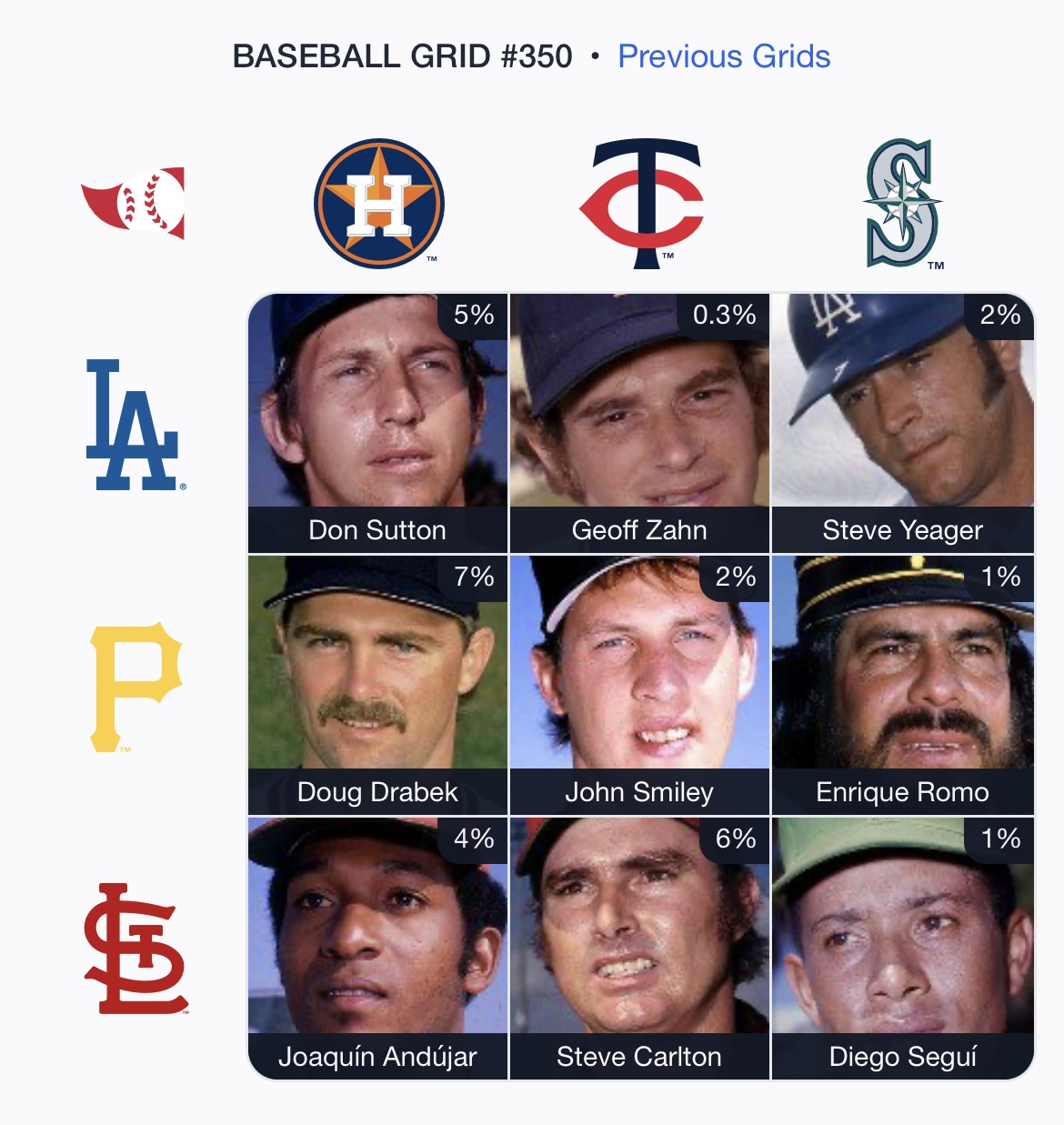
⚾️ Immaculate Grid 350 9/9: Rarity: 29

As I told my pal Doug, add 100 to my rarity score because. out of frustration, I looked at the 1977 Mariners roster to see who I remembered as a Cardinal. For kicks, I dropped him in to see how rare it was — rare!

See you tomorrow.

The Saturday Fungo

Charles Hudson – #27

In retrospect, the 1989 Tigers season was doomed from the start.

The core of the ’84 team was aging or playing elsewhere, and the farm system was dried up.

Thanks to the mirage of 1988’s 88-win, second-place finish, one game behind the Red Sox, there was only the flimsiest of hope that the ’89 team could contend.

Looking back, it’s obvious the club’s immediate and long-term futures were bleak.

So, they made curious deals like trading Tom Brookens to the Yankees for Charles Hudson, on March 23, 1989.

Three or four years earlier, Hudson would have been a shrewd pickup for Bill Lajoie: a veteran arm for rotation insurance or long relief. 

Alas, 1989 was the late ‘80s not the middle, and Hudson was too little too late for a bad, bad team. It wasn’t his fault!

Here are a few things to know about the right-hander’s time in Detroit:

  • Hudson made his Tigers debut on April 11 agains the Twins. Jack Morris started and lasted only until two outs in the fourth — he gave up eight hits, four walks and five runs. Hudson came in and settled things down, tossing three and a third innings, allowing just three hits and a run. Final score: Twins 14 – Tigers 0.
  • His final major-league appearance came on Aug. 11, 1989, against the Rangers in relief of Frank Tanana, was not a bad one: 3.1 IP, two hits, one run, two walks and four strikeouts. The Tigers lost, 7-3.
  • Hudson’s Tigers career: 18 appearances, 7 starts, a 1-5 record with a 6.35 ERA.

Birthdays

Curtis Granderson, Charles Hudson and the late Ralph Works.

Today’s Grid

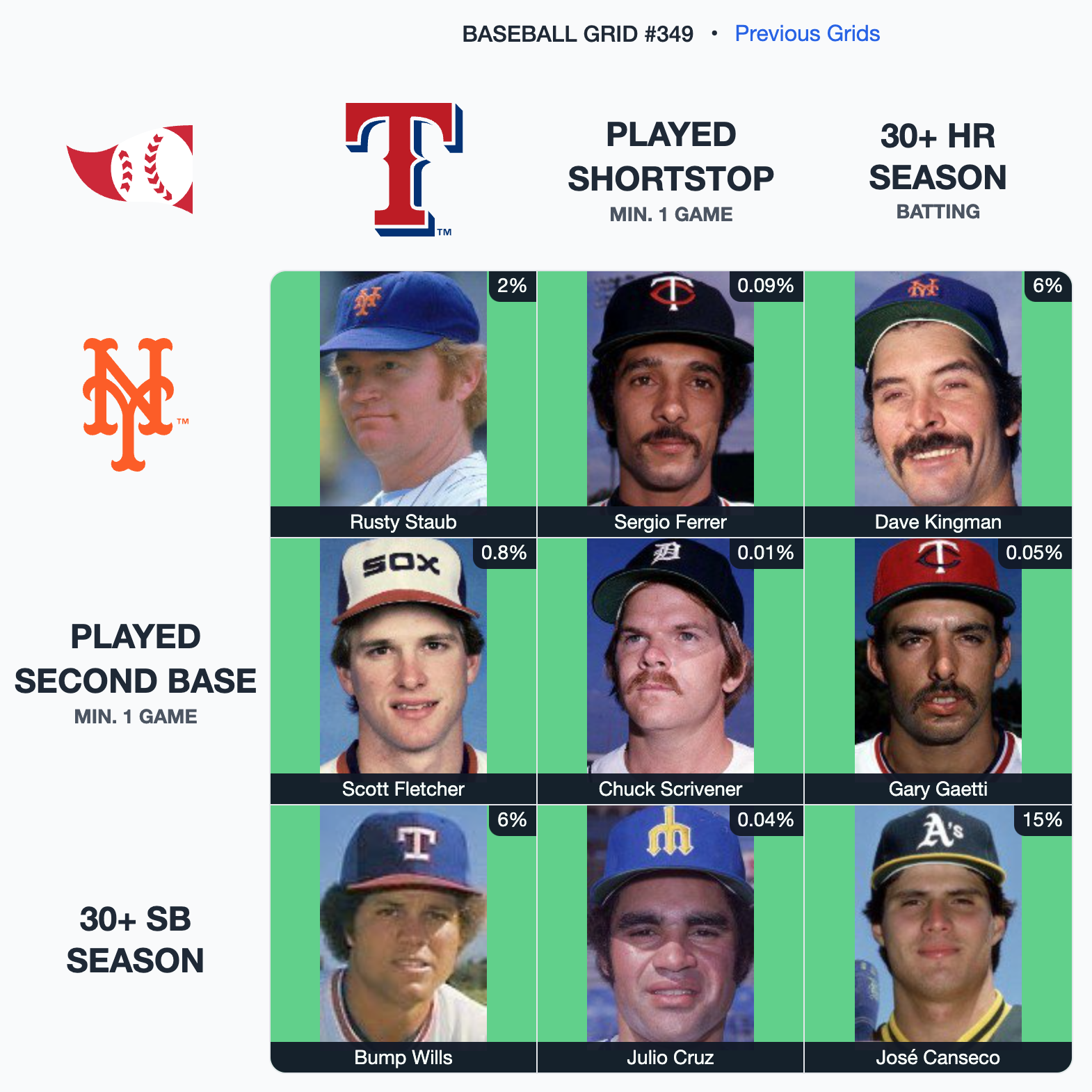
⚾️ Immaculate Grid 349 9/9 — Rarity: 29

I was cruising until the final square, Jose Canseco. Also, three former Tigers in today’s offering.

See you tomorrow.

The Friday Fungo

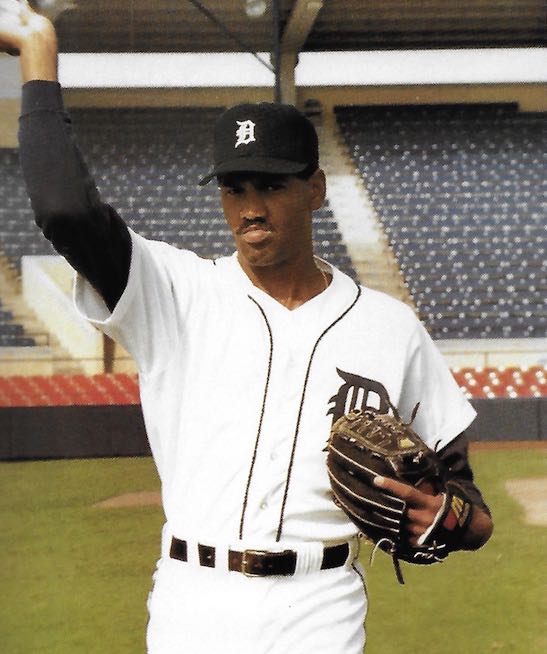
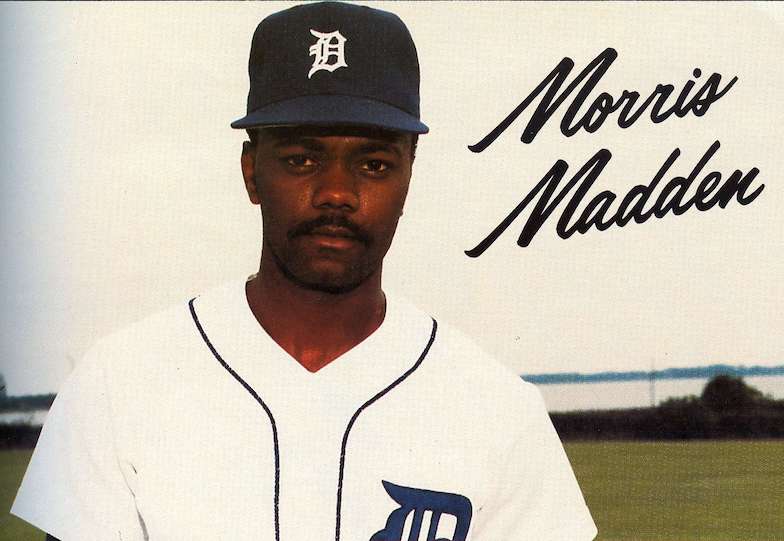
Morris Madden – #42

Lefty Morris Madden had a micro-career with the Tigers, appearing just twice during the 1987 season.

Appearance 1: On June 11 versus Milwaukee at Tiger Stadium, he came in during the sixth inning to relieve Eric King, who had relieved starter Jeff Robinson, with the bases loaded and walked Brewers second baseman Jim Gantner.

In his one inning of work, he allowed two earned runs and three walks. The Tigers lost the game 8-5.

Appearance 2: Robinson’s next start*, on June 16 at Toronto’s Exhibition Stadium, Madden came in to start the fifth inning.

*The Jays lit up Robinson for eight runs in three and two-thirds on the way to a 10-4 win.

  • The first hitter he faced, Fred McGriff doubled to center.
  • And that was the end of Morris Madden’s Tigers career.

Less than a month later, on Aug. 12, 1987, the Tigers sent Madden to the Pirates to complete the Aug. 7 trade of Darnell Coles for Jim Morrison.

If you’re wondering how he fared with Jim Leyland‘s Pirates, it depends on the year.

  • In 1988, he appeared in five games, allowed five hits and seven walks in five innings but didn’t allow a run. 
  • In ’89, Madden pitched 14 innings across nine games — including three starts — he allowed a stunning 13 walks, 17 hits, 14 runs, 11 earned. Final ERA: 7.07.

On Nov. 21, 1989, he was released by the Pirates, and though he pitched for the AAA Albuquerque Dukes in 1990, his major-league career was over.

Birthdays

Michael Fulmer, Robert Fick and the late Ralph “Sailor” Stroud, George Disch and James Casey

Today’s Grid

⚾️ Immaculate Grid 348 9/9 — Rarity: 19

See you tomorrow.

The Thursday Fungo

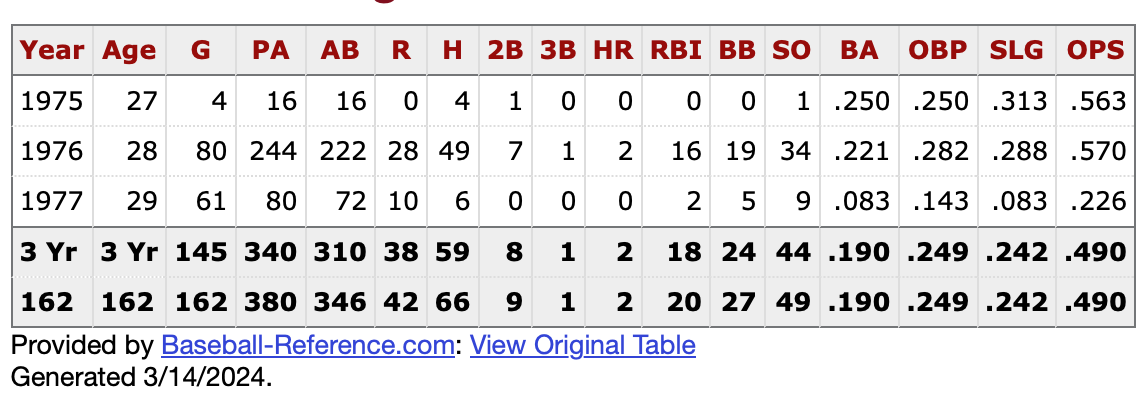
Chuck Scrivener – #9

If ever there were a time to break into major leagues, the forlorn Tigers of the mid-1970s presented a golden opportunity … unless you happened to play middle infield.

That was the scenario facing Chuck Scrivener who, it appeared, had the talent to be a big leaguer. I mean, he was drafted four times over three years:

  • Twins in the 17th round of the 1966 MLB June Amateur Draft
  • Braves in the 4th round of the 1967 MLB January Draft-Secondary Phase
  • Giants in the 8th round of the 1967 MLB June Draft-Secondary Phase
  • Tigers in the 2nd round of the 1968 MLB January Draft-Secondary Phase

Here’s a snapshot of Scrivener’s career:

  • Played nine seasons in the Tigers minor-league system before making his major-league debut on Sept. 18, 1975 against the Indians. He started at shortstop, batting leadoff, and struck out looking against Jim Bibby. Scrivener finished the night 0 for 4.
    • His final four appearances came as a defensive replacement, capped by his last Sept. 29, 1977, against his hometown Orioles, subbing in for rookie Alan Trammell.
    • With Trammell and Lou Whitaker establishing themselves, there was no path for Scrivener in Detroit. After spending 1978 in Evansville, hitting .262, the Tigers released him on Dec. 4. A month later, he signed with the Blue Jays, but didn’t appear in a game, in Toronto or in the minors.

    Chuck Scrivener: By the Numbers

    Birthdays

    Blaine Hardy and the late Mike StrahlerMarty McManus and Hub Pernoll

    Today’s Grid

    ⚾️ Immaculate Grid 347 9/9 — Rarity: 26

    See you tomorrow.

    The Wednesday Fungo

    Champ Summers

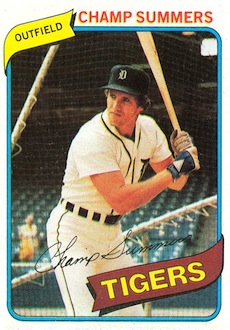
    Champ Summers was a fan favorite in Detroit and for good reason. He came to the Tigers as a career underachiever — at least at the major-league level — in an under-the-radar trade roughly a week before they hired Sparky Anderson in 1979.Summers_Champ

    The Reds traded the 30-year-old Summers to the Tigers for a player to be named later on May 25, 1979. On Oct. 25, the Tigers sent Sheldon Burnside to the Reds to complete the trade.

    The year before, John Junior Summers was the Minor League Player of the Year for the Reds’ top farm club, Indianapolis of the American Association. He led the AA with a .368 average, 34 homers and 124 RBI.

    In 1979, Summers was hitting .200 with a single home run after 27 early-season games with the Reds, but after coming to Detroit, he had the best three seasons of his career.

    That season he batted .313 with 20 home runs (14 solo) in 90 games and posted a .614 slugging percentage along with a 1.028 OPS. Anderson played Summers primarily in right field with a few DH assignments sprinkled in.

    The Tigers rewarded him with a three-year contract near the end of the ’79 season.

    Tigers fans loved Summers and he continued to provide punch to a young lineup. In 1980, his numbers slipped ever-so slightly but they were solid: .297/17/60 with an OPS of .897.

    His production dropped further in the strike-shortened season of 1981 when, at age 35, his average fell to .255 and his power numbers plummeted, too. Summers hit only three home runs and eight doubles in 64 games in what would be his final season in Detroit.

    In March 1982 the Tigers dealt him to the Giants for first baseman Enos Cabell. Summers would struggle in his two seasons in San Francisco, posting a .231 average and four home runs.

    You can read the full post in the Archives.

    Random Game: Aug. 7, 1987

    Tigers 8 – Yankees 0

    W: Jeff Robinson (8-5) – L: Rick Rhoden (14-7) | Boxscore

    A classic midsummer showdown between A.L. East rivals, who were gridlocked atop the division heading into this game:

    AL East Division July 17,1987
    Tm W L W-L% GB
    TOR 65 44 .596
    NYY 65 45 .591 0.5
    DET 62 44 .585 1.5
    MIL 56 51 .523 8.0
    BOS 51 57 .472 13.5
    BAL 49 60 .450 16.0
    CLE 40 69 .367 25.0
    Provided by Baseball-Reference.com: View Original Table Generated 3/13/2024.
     
    I was there for this one with a big group of friends in our usual bleacher seats, upper deck, dead center.

    Miscellany

    • Umpires: HP – Mike Reilly, 1B – Tim Welke, 2B – Terry Cooney, 3B – Joe Brinkman
    • Time of Game: 2:31
    • Attendance: 48,262

    Birthdays

    Mike Aviles, the late Cliff Mapes, Eric Erickson and Mal Eason.

    Today’s Grid

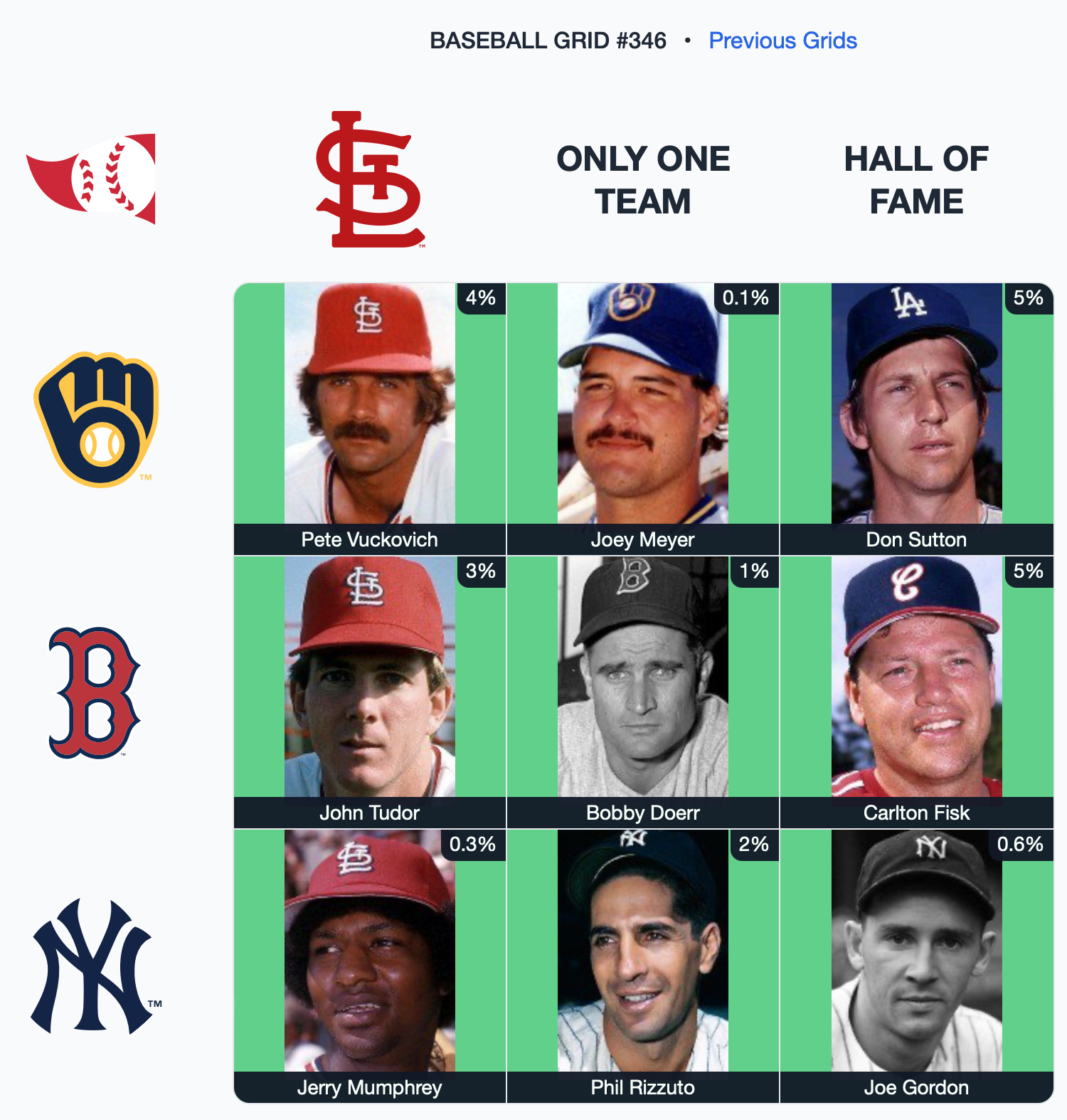
    ⚾️ Immaculate Grid 346 9/9 — Rarity: 22


    Screenshot 2024-03-13 at 8.06.16 AM

    See you tomorrow.

    The Tuesday Fungo

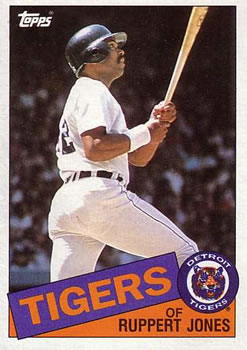
    Ruppert Jones – #32

    The 1984 season was an embarrassment of riches on so many levels. And when the Tigers signed Ruppert Jones to a minor-league deal on April 10, 1984, it was almost too much to comprehend.

    Jones started the year in Evansville for what amounted to an extended spring training. That didn’t stop my friends and me from wondering:

    When will he get called up?

    Where will he play? 

    When will he play?

    • The answer to the first question was early June, after lighting up the American Association, batting .313, 9 HR, 45 RBI and a .986 OPS in his 45 games with the Triplets.
    • The answer to the second question was left field and centerfield, with spot DH duty.
    • As for question three: 79 games. He finished the year with a .284 average, 12 HR, 37 RBI and a .862 OPS. 

    In the postseason, Jones played in just four games — ALCS games one and two, and World Series games two and four — and notched only a walk and a run scored in nine plate appearances.

    After the ’84 season, the Tigers let him walk — not a popular move in my eyes at the time (or now!). In January 1985, Jones signed with the Angels and played for them until his final big-league game, Oct. 4, 1987.

    Check out this full bio on Jones by Adam Ulrey as part of SABR’s Bio Project.

    Birthdays

    Zach MinerCraig DingmanRuppert JonesLarry Rothschild and the late Eulogio “Frankie” De La Cruz and George Maisel

    Today’s Grid

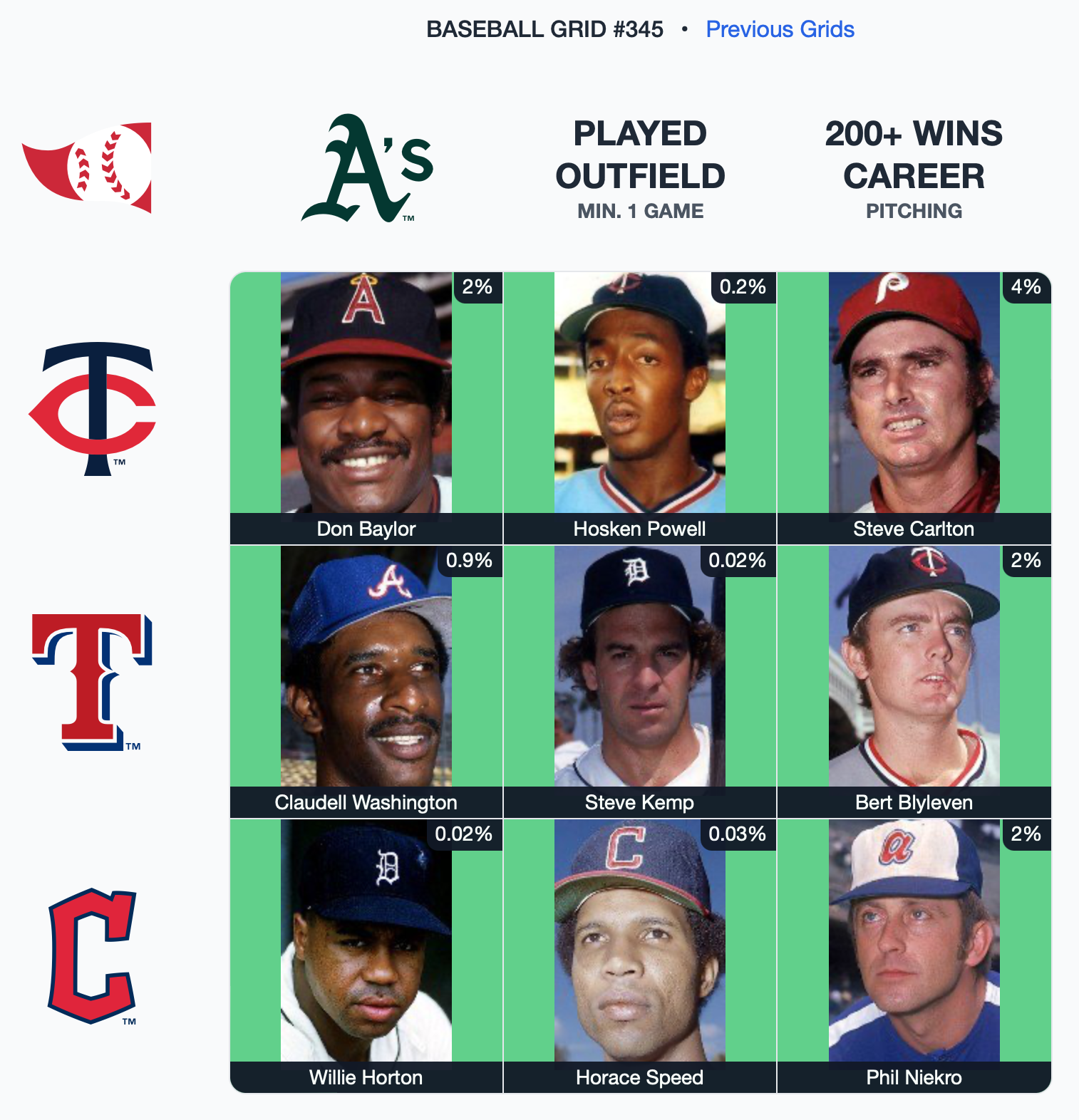
    ⚾️ Immaculate Grid 345 9/9 — Rarity: 11

    If I had put Jack Morris in the top-right square, I could have had a Tigers bottom-right-to-top-left-diagonal Hollywood Squares win situation.

    See you tomorrow.

    The Monday Fungo

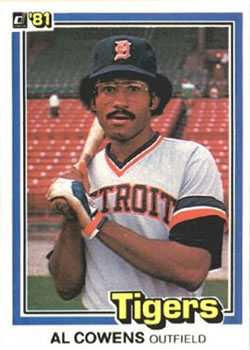
    Al Cowens – #10

    Stop me if you’ve read this here before: When the Tigers traded Jason Thompson for Al Cowens, I was not a happy 12 year old.

    But Cowens was an intriguing player to me because he was on those great Royals teams in the late-’70s.

    Presumably the Tigers and Angels, at the time of the trade, thought a change of scenery would help both players — and it seemed to work.

    • Cowens was hitting .227 with the Angels with a homer, 17 RBI and a .597 OPS. As a Tiger, he hit .280 in 108 games, with five homers, 42 RBI and a .709 OPS. All told, his 1980 line was: .268, six homers, 59 RBI and a .684 OPS.
    • Thompson hit just .214 with four homers, 20 RBI and a .638 OPS, in Detroit, but warmed up quickly in Anaheim: .317, 17 home runs, 70 RBI and a .965 OPS. He finished the year at .288, 21 home runs, 90 RBI and .873 OPS.

    Just four days after the trade, Cowens made his Tigers debut* against the Angels on May 30, 1980 at Tiger Stadium. He batted fifth, going 2 for 5 with a run scored.

    *Thompson made his Angels debut on May 28 against the Rangers, pinch hitting for catcher Tom Donohue. He hit a bases-loaded double off Sparky Lyle, clearing the bases, and scored when Dickie Thon drove him home.

    In 1981, Cowens appeared in 85 games for the Tigers, hitting .261 with one home run, 18 RBI and a .667 OPS … and that was it for his time in Detroit.

    On March 28, 1982, the Mariners purchased his contract and he had a nice bounce-back year in Seattle, hitting .270 with 20 home runs, 78 RBI and an .800 OPS.

    Cowens’ final game with the Mariners, and in the majors, was June 8, 1986. The club released him four days later.

    Birthdays

    The late Bill Lawrence and Art Ruble.

    Today’s Grid

    ⚾️ Immaculate Grid 344 8/9 — Rarity: 129

    See you tomorrow.